Scope and approval
Confirm the asset inventory, ownership, processing permissions and any restrictions on handling or release.

Rapid Solutions International
Banks replace computers, servers and storage equipment during technology upgrades, branch closures and data center changes. Retired devices may still hold customer records, account information and internal financial data.
Why it matters
An ITAD solution for banks brings data sanitization, asset tracking, reuse and recycling into one controlled process. It helps teams account for retired equipment and document what happened to the information stored on it.
Banking needs
Challenges
| Challenge | ITAD response |
|---|---|
| Customer data remains on retired or faulty drives | Apply an approved sanitization or destruction method and document the result. |
| Equipment sits across branches, offices and storage | Reconcile inventories and use documented collection and handover procedures. |
| Security policies restrict movement of intact media | Assess on-site processing and witnessing requirements before collection. |
| Auditors need evidence for individual assets | Link serial numbers to processing records, certificates and final outcomes. |
| Usable equipment loses value while awaiting disposal | Assess resale potential once the bank approves sanitization and release. |
| Equipment removal could affect live banking systems | Agree the removal scope and schedule with the bank’s IT team before decommissioning. |
Services
Erasure, physical destruction, shredding and degaussing, with on-site, off-site and witnessed options. Agree which devices qualify for erasure and reuse, which media require destruction, how to handle failed results, and what evidence the bank needs.
Serial recording, documented handovers and processing reports. For servers and storage, specify whether removed drives must remain linked to their original equipment. Hold untreated assets separate from processed equipment.
Equipment removal, data treatment and disposition of retired hardware — with approved shutdown scope, live systems protected, migration confirmed, and media treated before leaving the site.
Inspection, testing, grading, refurbishment and resale of eligible equipment after the bank approves release. Equipment unsuitable for reuse follows an appropriate recycling route with records kept separate from sanitization evidence.
Process
Confirm the asset inventory, ownership, processing permissions and any restrictions on handling or release.
Document handovers, match received equipment against the approved inventory and hold discrepancies for review.
Apply authorised sanitization or destruction methods and record results against the relevant assets.
Route equipment to the approved reuse, resale or recycling destination once data treatment requirements are met.
Deliver agreed reports, reconcile the final inventory and assign next actions for outstanding items.
Asset IDs, handovers, discrepancies, methods and results, certificates, outcomes and outstanding status.
FAQs
In this context, IT asset recovery concerns retired technology. Internal redeployment can preserve its useful value, while authorised resale can generate a financial return. It is separate from loan or collateral recovery.
Yes. A device that no longer starts may still contain readable storage media. Include faulty equipment in the assessment and agree a suitable treatment method.
Check the lease and obtain the owner’s instructions first. Confirm the required return condition and permission for any treatment that would damage the equipment.
The device should remain outside the reuse or resale batch, with the unsuccessful result recorded against its asset identifier. Follow the bank’s agreed exception procedure before closing the item.
Yes. On-site erasure or destruction can be arranged according to the media type, site conditions and the bank’s approved requirements. Agree access, witnessing and reporting in advance.
Rapid Solutions International helps banks and financial institutions plan secure ITAD — from customer-data treatment and custody records through recovery, recycling and reconciled project close.
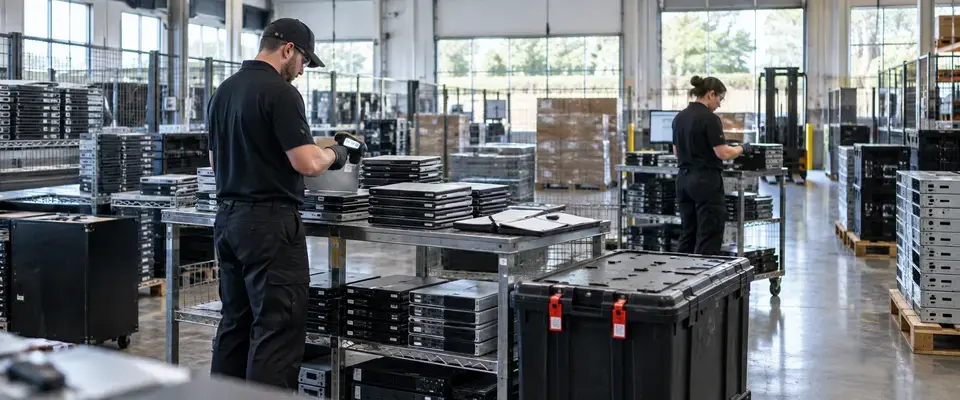
Banking & Financial Services
A regional bank turned retired IT equipment from a compliance liability into a fully audited, value-generating recovery program within 14 days.
View Detail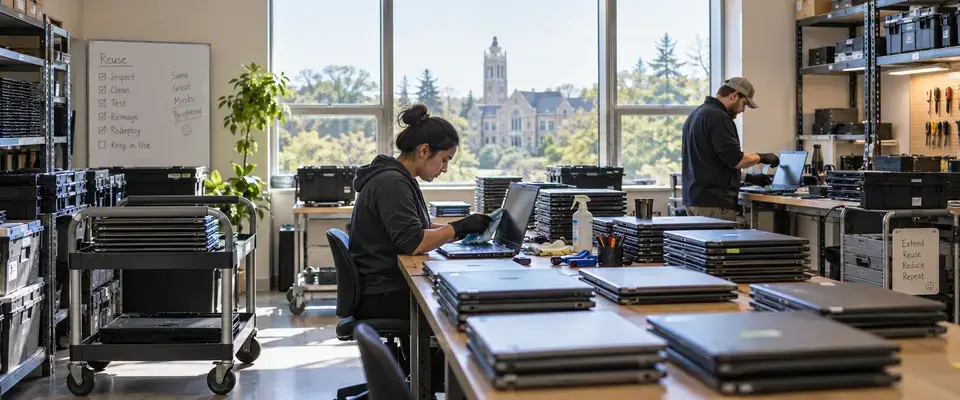
Higher Education
A private university refreshed IT assets across nine campus collection points while keeping 79% of devices in productive use.
View Detail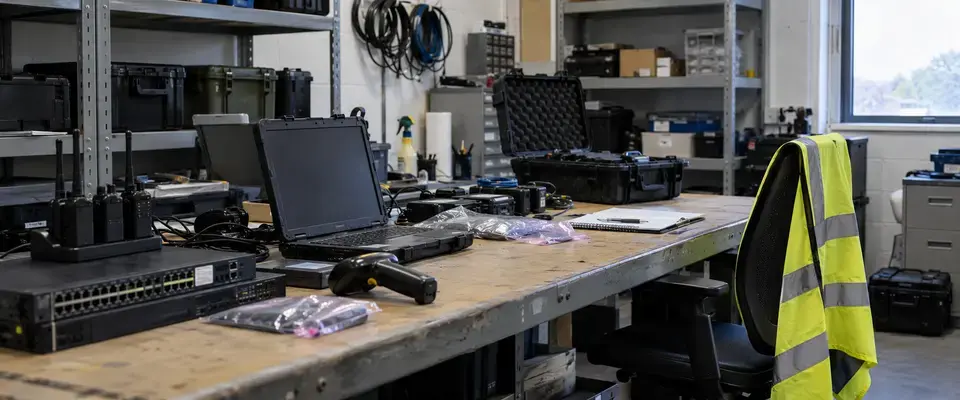
Aviation
An aviation operator retired 4,100 IT assets across four sites with 99% reuse recovery and full data protection.
View Detail
Consulting & Professional Services
A distributed consulting firm recovered 96% of returned laptops for redeployment across 14 collection points.
View Detail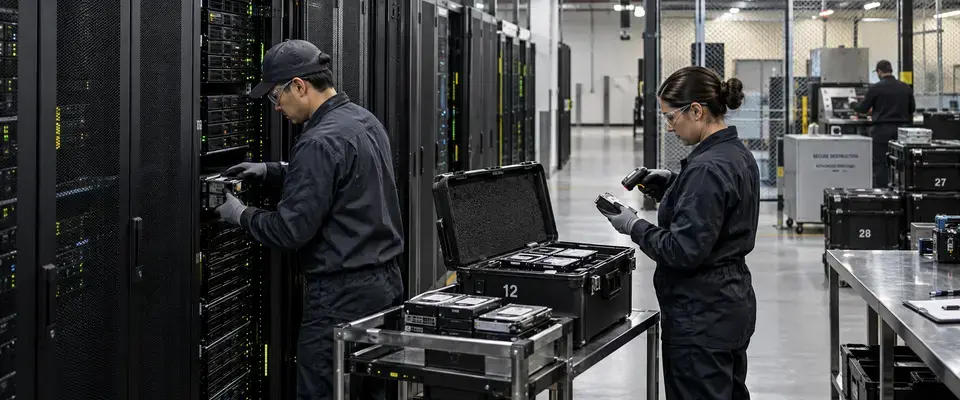
Data Center & Infrastructure
A data center operator processed 5,220 storage media items in 15 days with verified chain of custody.
View Detail