Review the asset list
Share equipment types, quantities, locations and known faults.
Rapid Solutions International
Equipment bought to support your cause should deliver value for as long as it can. When it reaches retirement, the information stored on it needs just as much care as the equipment itself.
Why it matters
A fundraising laptop may hold donor details. A computer used by a support team may contain confidential beneficiary records. Donating, selling or recycling those devices requires more than clearing the desk.
At Rapid Solutions International, we provide IT asset disposition, data destruction and asset recovery services for charities and nonprofit organizations in the UAE. We work with your team to agree how retired equipment will be handled before processing begins.
Different approach
Charities must balance information security with careful use of funds, equipment and staff time. Replacing every ageing computer may be unaffordable. Keeping every donated device can also create costs through repairs, storage and technical support.
ITAD for charities also involves accountability. Management teams, board members and funders may need to understand why equipment was sold, destroyed or transferred. An asset bought for a funded project may need different approval from a general donation.
Challenges
| Charity-specific challenge | What needs attention | How ITAD can help |
|---|---|---|
| Confidential beneficiary and safeguarding records | Devices may hold information about vulnerable people | Appropriate data treatment with evidence of completion |
| Responsibility for donated funds | Equipment may retain value even when one team no longer needs it | Assessment of repair, internal reuse or resale options |
| Mixed equipment donations | Devices can arrive with unknown faults and previous-owner data | Intake checks, data handling and condition assessment |
| Grant-funded or restricted assets | Funding agreements may affect sale, transfer or disposal | Processing instructions that reflect approved decisions |
| Limited internal IT capacity | Staff and volunteers may share equipment responsibilities | A defined asset list, named contacts and clear handovers |
| Technology intended for community use | An unsuitable donation can leave recipients with repair costs | Testing and suitability checks before an approved transfer |
Data & value
Retired charity devices may still hold donor details, payroll files and confidential case notes. Our secure data destruction services include erasure and physical destruction, with on-site, off-site and witnessed options.
Before approving erasure or destruction, your authorised team should confirm that required records remain accessible and retention requirements have been resolved.
Equipment that no longer suits one team may still serve another. Our IT asset value recovery services include assessment, testing, repair and remarketing.
Before approving sale or buyback, confirm your charity is authorised to sell the equipment and receive any proceeds, including where funding conditions apply.
Donations & reuse
Your charity is responsible for deciding whether to accept donated equipment and confirming ownership, permission for data treatment and suitability for its intended use. Keep unchecked devices separate. If a donor’s files remain, restrict access and agree authorised data treatment without opening the files.
Useful donations should be secure, functional and suitable for the recipient. Check data sanitization, hardware condition, software support and essential accessories before transfer. The proposal should identify the checks RSI will perform, any exclusions and preparation work included.
Planning
We establish the requirements before processing so your team can make informed approvals.
Share equipment types, quantities, locations and known faults.
Identify ownership questions, funding conditions and limits on resale or reuse.
Confirm collection, data treatment, recovery priorities and reporting requirements.
Compare received assets with the expected list, process through agreed routes and record exceptions.
Use final records to update your asset register and close completed items.
For charities with limited IT staff, a named coordinator keeps approvals clear with finance and funded projects.
FAQs
Small quantities can still need professional processing, especially when devices contain sensitive records. Share your equipment list so we can assess the work and costs. Resale value is only one part of the decision.
Charitable status alone does not establish the price. Location, quantity, handling requirements and recovery potential affect the quotation. We confirm the charges for the agreed scope.
Only with the owner’s explicit authorisation and a separate plan for personal and organisational data. Do not add privately owned equipment to a charity collection automatically.
Next step
Send us your equipment list, collection locations and any restrictions on its disposal. We will review the available services and agree the next steps with you.
Rapid Solutions International helps charities and nonprofits in the UAE plan secure ITAD — protecting donor and beneficiary information while recovering useful value where authorised.
Banking & Financial Services
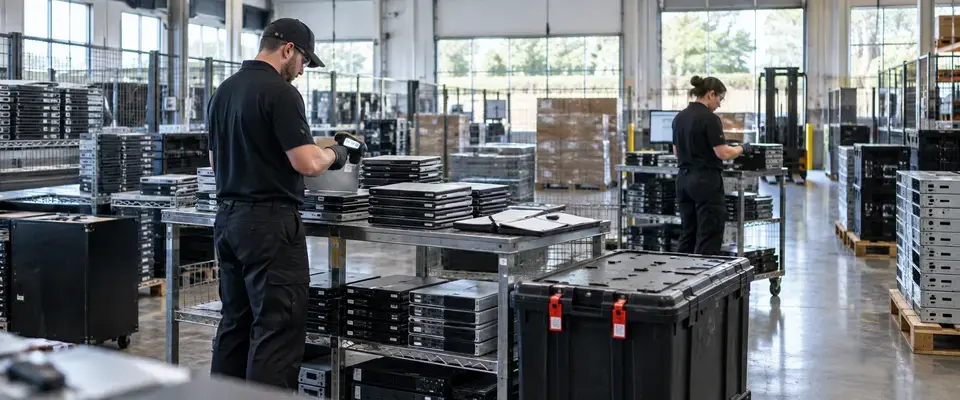
A regional bank turned retired IT equipment from a compliance liability into a fully audited, value-generating recovery program within 14 days.
View Detail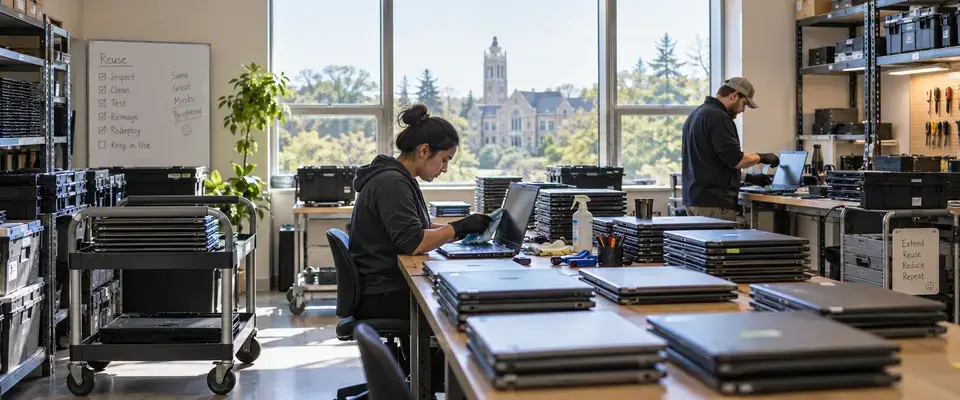
Higher Education
A private university refreshed IT assets across nine campus collection points while keeping 79% of devices in productive use.
View Detail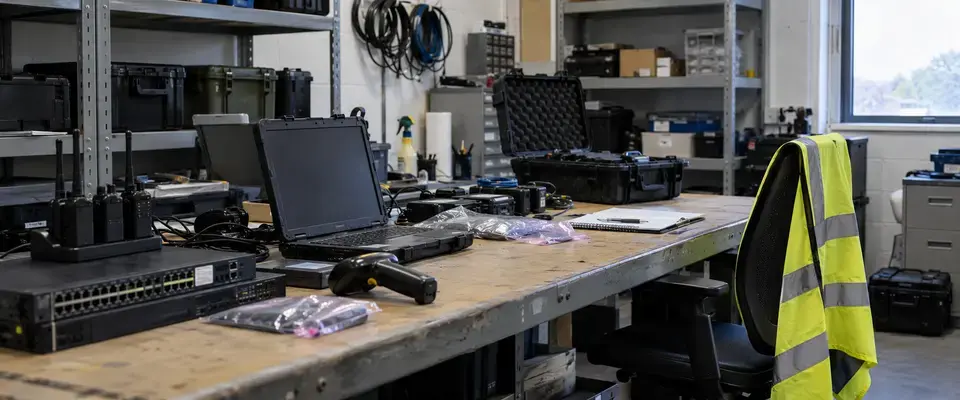
Aviation
An aviation operator retired 4,100 IT assets across four sites with 99% reuse recovery and full data protection.
View Detail
Consulting & Professional Services
A distributed consulting firm recovered 96% of returned laptops for redeployment across 14 collection points.
View Detail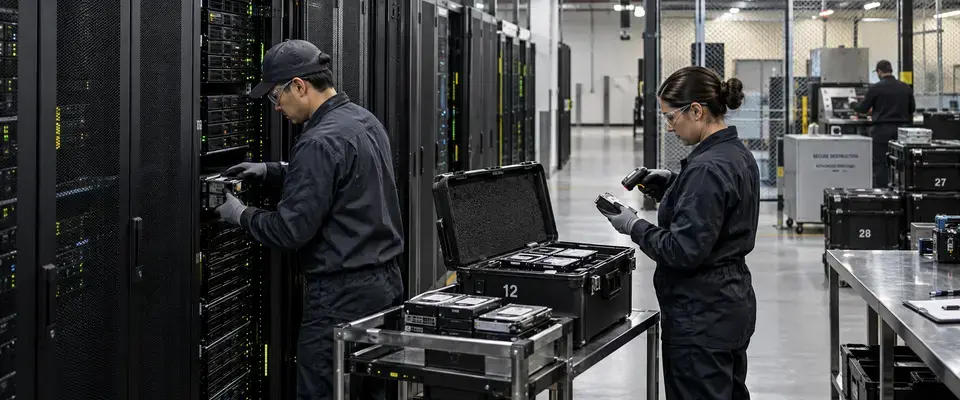
Data Center & Infrastructure
A data center operator processed 5,220 storage media items in 15 days with verified chain of custody.
View Detail