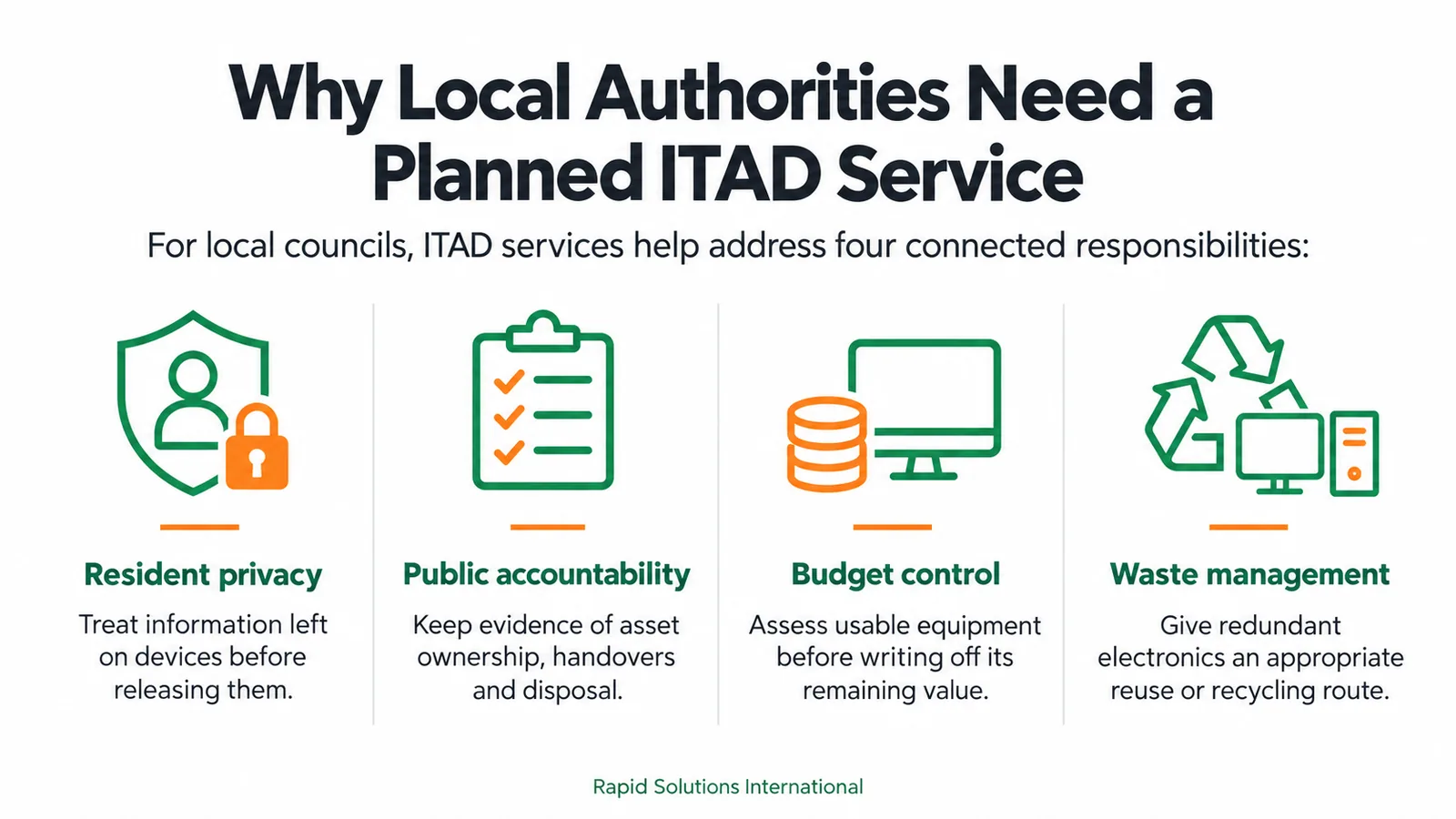
Resident privacy
Treat information left on devices before releasing them.

Rapid Solutions International
Protect resident data and account for retired equipment with Rapid Solutions International.
Why it matters
Laptops, servers and printers used by municipalities and local government entities can hold housing records, identity documents, payment details and staff information. Replacing the equipment does not remove that data.
Our secure ITAD services for local authorities combine data destruction, asset tracking, reuse and recycling. We help you choose a suitable route for retired technology based on its condition and your security requirements.
Public duty
Local authorities must protect sensitive information while accounting for publicly funded equipment. Technology upgrades, office moves and department closures can leave retired devices across government offices and service locations. Without a disposal plan, equipment can sit in storage, lose resale value and become harder to reconcile.
For municipalities and local government entities, ITAD services help address four connected responsibilities:
Treat information left on devices before releasing them.
Keep evidence of asset ownership, handovers and disposal.
Assess usable equipment before writing off its remaining value.
Give redundant electronics an appropriate reuse or recycling route.
Coverage
Different devices need different checks before processing. Our IT asset disposition services cover office computers, storage, servers, networking equipment and other electronics. The assessment should identify both the hardware and the information it may contain.
| Equipment | Challenge for your authority | How RSI can help |
|---|---|---|
| Laptops and desktops | Personal records remain on devices that may still have resale value | Erasure, testing and refurbishment; destruction where required |
| Servers and storage systems | Multiple drives need individual identification and treatment | Asset serialization, data treatment and supporting reports |
| Printers and multifunction devices | Internal storage can go unnoticed during disposal | Assess the equipment and agree treatment for supported media |
| Routers, switches and firewalls | Saved configurations and credentials need attention | Assess sanitization and remarketing options before release |
| Loose drives and backup media | Damaged or unsupported media may not complete erasure | Evaluate suitable physical destruction or other approved treatment |
Before treatment
Before choosing an erasure or destruction method, ask your records owner to confirm that the information on each device is approved for deletion. Check applicable retention requirements and any legal or investigation holds, and ensure records that must be retained have been transferred and remain accessible. Document the approval and hold back any device awaiting a decision. Retiring equipment does not automatically authorise deleting its contents.
Data treatment
The data risk and your authority’s policy should determine the treatment. We offer secure data destruction, including erasure and physical destruction. Successful sanitization can preserve suitable hardware for reuse. Failed storage or media subject to a destruction requirement needs a different route.
NIST describes media sanitization as a process that “renders access to target data on the media infeasible for a given level of effort.” Source: NIST SP 800-88 Revision 2.
A useful distinction: a failed computer may contain readable storage, while a working computer may remain reusable after its drive is destroyed. Assess both parts rather than treating every item as scrap.
On-site processing can address policies that prevent intact storage from leaving your premises. Our on-site destruction service includes mobile processing, witnessing options, inventory reporting and destruction certificates.
Confirm the location, media types, vehicle access and serial-number requirements before booking.
Sanitization must match the storage technology. Agree an alternative and a documented outcome when a process fails, rather than assuming every item can follow the same route.
Accountability
Disposal records should connect your asset register to the equipment’s final outcome. Multiple locations and incomplete inventories can make this difficult. We provide asset tracking and chain-of-custody documentation to support reconciliation.
Agree a reporting format that includes:
For example, if your register lists 80 laptops but the collection contains 79, a batch weight cannot explain the missing item. Record the difference and assign someone to investigate it. This illustrative situation shows why item-level records matter.
Value & sustainability
Retired technology may still have useful life, but security and disposal approval come first. Our IT asset value recovery services include testing, grading, repair and refurbishment. Suitable assets can then enter IT remarketing.
Is refurbishment worth it? Compare the expected return after collection, sanitization, repairs and selling charges. A clear net estimate is more useful than a high resale figure with unexplained deductions. For equipment without a suitable reuse route, we offer electronics recycling.
The Global E-waste Monitor 2024 reported that only 22.3% of the e-waste generated worldwide in 2022, by mass, was documented as properly collected and recycled. Request separate records for reused equipment and recycled materials. A collection weight alone does not show the final environmental outcome.
Why Rapid Solutions
We coordinate collection, data treatment, asset reporting and recovery options within an agreed project scope. Before work begins, we confirm the processing location, reporting requirements and permitted disposition routes with your team.
On-site and off-site data destruction options matched to media types, location restrictions and witnessing needs.
Asset serialization, tracking and supporting documentation that connect your register to final outcomes.
Testing, refurbishment and remarketing for suitable assets, with recycling for equipment unsuitable for reuse.
Our Sharjah facility is R2v3 certified. You can review our published certification information and request the current certificate during procurement to confirm the facility and activities covered. We work with your team to match the agreed services to your authority’s security requirements, disposal permissions and reporting needs.
Next step
A clear scope helps departments prepare equipment without disrupting daily services.
Provide equipment types, approximate quantities and collection locations.
Confirm records-release approvals, restricted media, on-site needs, reporting fields and authorised disposal routes.
Agree site access, named contacts, costs, processing timelines and service availability.
Reconcile the returned records and resolve exceptions before closing the project.
This gives secure ITAD services for local authorities a defined scope before any equipment changes hands.
FAQs
Check the lease and obtain the owner’s approval. Return conditions may restrict resale, destruction or parts removal. Keep leased assets identifiable throughout the project.
Hold it back. Your records owner should confirm that required information remains accessible before approving treatment. Retiring hardware does not automatically authorise deleting its contents.
For devices intended for reuse, ask your IT team to coordinate authorised removal with the disposal process. Keep the equipment controlled while it awaits treatment.
Rapid Solutions International helps local authorities plan secure ITAD — from inventory and collection through verified data treatment, accountable reporting, and responsible reuse or recycling.
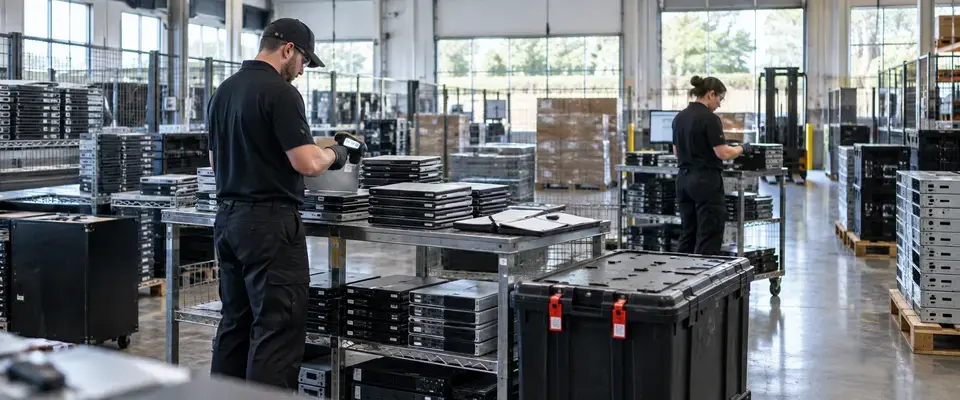
Banking & Financial Services
A regional bank turned retired IT equipment from a compliance liability into a fully audited, value-generating recovery program within 14 days.
View Detail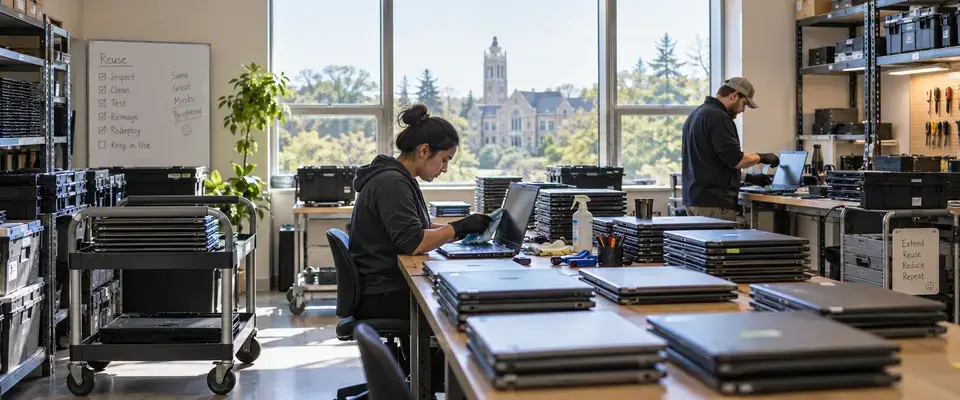
Higher Education
A private university refreshed IT assets across nine campus collection points while keeping 79% of devices in productive use.
View Detail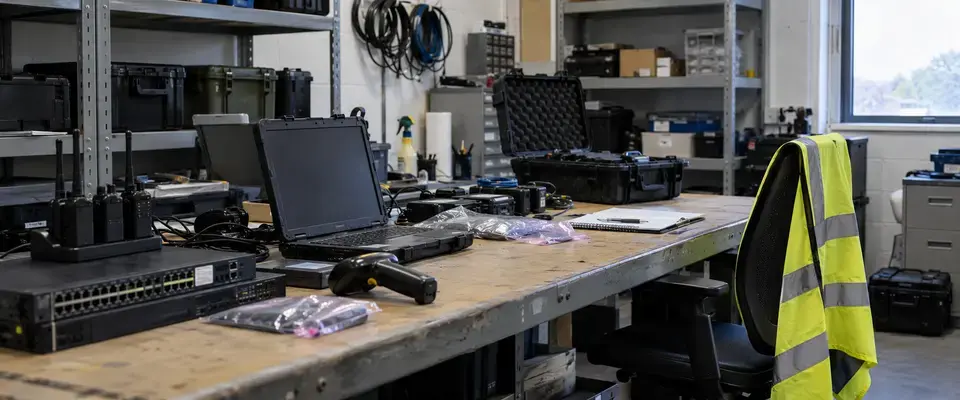
Aviation
An aviation operator retired 4,100 IT assets across four sites with 99% reuse recovery and full data protection.
View Detail
Consulting & Professional Services
A distributed consulting firm recovered 96% of returned laptops for redeployment across 14 collection points.
View Detail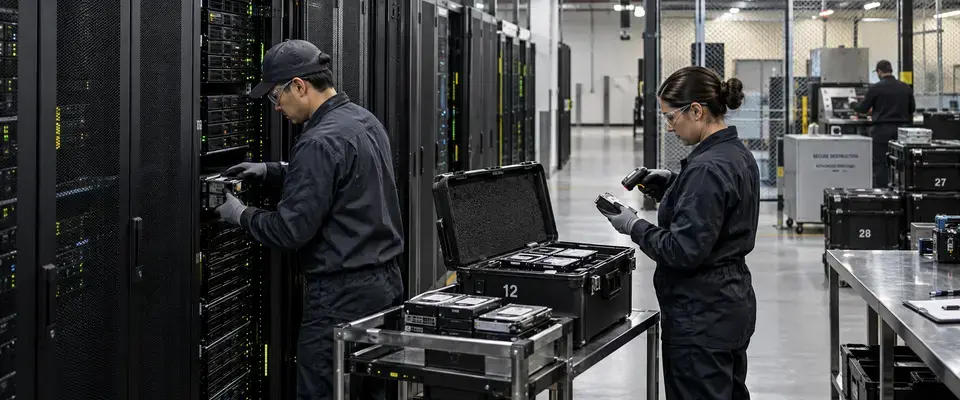
Data Center & Infrastructure
A data center operator processed 5,220 storage media items in 15 days with verified chain of custody.
View Detail