Share retirement details
Provide your inventory, originating sites, refresh schedule, and reporting requirements.
Rapid Solutions International
Your servers may stop running. Your responsibility for their data continues.
Why it matters
A hardware refresh can leave your team with racks of retired servers, storage devices awaiting destruction, and equipment that still has resale value. Managing that inventory takes more than arranging transport. You need to know who owns each asset, whether its retirement has been authorized, how its data will be handled, and what records will confirm the outcome.
Rapid Solutions International provides ITAD services for data centers, supporting routine hardware refreshes through secure data destruction, asset recovery, and responsible recycling. Our services help operators manage retired hardware while keeping control of sensitive information and supporting equipment reuse.
Structured retirement
Data centers need a retirement process that accounts for equipment, data, ownership, and work happening around live systems.
A single retirement cycle may involve several teams. Operations confirm which assets are no longer needed. Security sets the data handling requirements. Finance checks asset ownership and recovery value. A colocation customer may need to authorize the release of its own equipment. Without a shared plan, hardware can move before someone confirms its status.
A structured retirement process brings these decisions into one agreed scope. Before assets enter the disposition process, the plan should establish:
Live operations
Retirement work must follow the facility’s change controls. Confirm the approved assets and release permissions before work affects live systems. Where physical removal is required, our data center decommissioning services cover site planning, authorized disconnection, rack removal, packing, and logistics.
The following decisions help turn common retirement challenges into a clear ITAD scope.
| Data center challenge | What the ITAD plan should address | What your team should confirm |
|---|---|---|
| Retired equipment sits beside live systems | Clear retirement status and release authorization | Asset identifiers and approval to release each device |
| Hardware belongs to different customers | Separate ownership and release records | Written authorization from the relevant owner |
| Storage media contains sensitive information | Suitable erasure or destruction methods | Media type, security policy, and processing location |
| Asset records do not match physical stock | Inventory checks and discrepancy handling | Missing, additional, or unreadable identifiers |
| Working equipment may retain value | Testing and resale assessment | Ownership, resale permission, and commercial terms |
| Hardware has no practical reuse route | Responsible recycling arrangements | Processing destination and supporting records |
Data security
Retired hardware needs controlled handling until its data has been properly sanitized or destroyed. Start by identifying the media that needs attention. A server’s main drives are only part of the review. Boot devices, storage arrays, backup media, and embedded storage may also fall within the project scope.
The practical question is simple: can your team account for every device that held data?
Completed backups and migrations are only part of the approval process. Before approving sanitization or destruction, confirm that required data remains accessible and that retention or preservation requirements have been resolved. Record the approval from the authorized owner and keep media with unresolved requirements outside the processing scope.
The right treatment depends on the device, its condition, and the sensitivity of the information. A working device approved for reuse may qualify for sanitization. Failed media or equipment subject to a destruction requirement needs a different route.
NIST SP 800-88 Rev. 2 provides guidance for establishing a media sanitization program — a technical reference for the process, not a blanket guarantee of compliance.
Our secure data destruction services include on-site and off-site options, data erasure, physical destruction, shredding, asset serialization, and destruction witnessing. The service scope should specify which methods apply to your equipment.
A device should remain traceable when it moves between people, locations, or processing stages. Custody records should identify the equipment, record its handovers, and connect it to the final processing outcome. Where drives are removed from servers or storage systems, agree whether reporting must link each media identifier to its parent asset and originating site.
Audit readiness
Useful compliance records show what happened to specific assets and how the work met your agreed requirements. The retirement process should reflect the facility’s location, customer commitments, internal policies, and applicable obligations. These requirements belong in the project scope before collection.
Your compliance and security teams should define the evidence they need, including:
We provide reporting and certificates according to the agreed service scope. Agree on the required document format and level of detail before the project starts. A useful acceptance check is to select an asset from the original list and follow its record through to the final outcome.
Sustainability & value
A credible retirement program separates equipment suitable for reuse from material that needs recycling. The Global E-waste Monitor 2024 reports that the world generated 62 million tonnes of electronic waste in 2022, with only 22.3% documented as formally collected and recycled in an environmentally sound manner.
Our IT remarketing services include testing, refurbishment, component recovery, resale, and responsible electronics recycling. For example, a security policy may require destruction of a server’s drives — that decision does not automatically determine the fate of its chassis, processors, or other reusable components.
Ask for clear distinctions between equipment reused, components recovered, and material sent for recycling. A total collection weight alone does not explain what happened afterward. If your ESG team needs carbon estimates, agree on the methodology and available evidence in advance.
The useful comparison is the expected net return after the agreed project costs. Assess resale potential alongside data security requirements and the owner’s authorization. Equipment age, configuration, condition, and buyer demand all affect the result.
Project planning
A clear plan keeps hardware retirement, data security, and asset recovery coordinated across each refresh cycle.
Provide your inventory, originating sites, refresh schedule, and reporting requirements.
Identify who can authorize retirement and data treatment. Resolve retention requirements before approving sanitization or destruction.
Define treatment methods, processing locations, custody records, exception handling, and any required media-to-parent-asset links.
Confirm reuse, resale, or recycling after meeting data security requirements, and agree valuation and payment terms where applicable.
Reconcile the inventory, resolve discrepancies, and verify processing outcomes and any agreed value recovery settlement.
Our published data center case study covers 5,220 storage media items processed over 15 days — with verified chain of custody and on-site drive destruction.
Next step
A completed retirement cycle should leave your team with reconciled asset records, documented data handling, and a confirmed outcome for each asset. We bring together data destruction, asset recovery, and recycling to support that work, from routine server refreshes to the retirement of storage and networking equipment.
Share your equipment list, ownership details, site locations, refresh schedule, and security requirements. These details help establish the processing options, reporting needs, and potential recovery value.
FAQs
ITAD means IT asset disposition: the controlled retirement or reallocation of equipment that an organization no longer needs. In a data center, it covers ownership approvals, media security, value recovery, and final disposition records for retired servers, storage, networking equipment, and associated assets. It supports routine hardware refreshes as well as assets retired during larger infrastructure changes.
Depending on the agreed scope, documentation can include asset inventories, custody records, sanitization reports, destruction certificates, and final disposition records. Where required, reports should also link removed media to its parent equipment and originating site. Before appointing a provider, ask for sample documents and check that their fields match your internal reporting needs.
Yes, subject to confirmed coverage and local arrangements. Our international network includes facilities in the UAE, Poland, and the USA. For a multi-site project, confirm the service available at each location and agree on consistent reporting requirements, including site identifiers and ownership records.
Rapid Solutions International helps data center operators plan secure ITAD — from ownership approvals and media handling through verified destruction, value recovery, and clear project records.
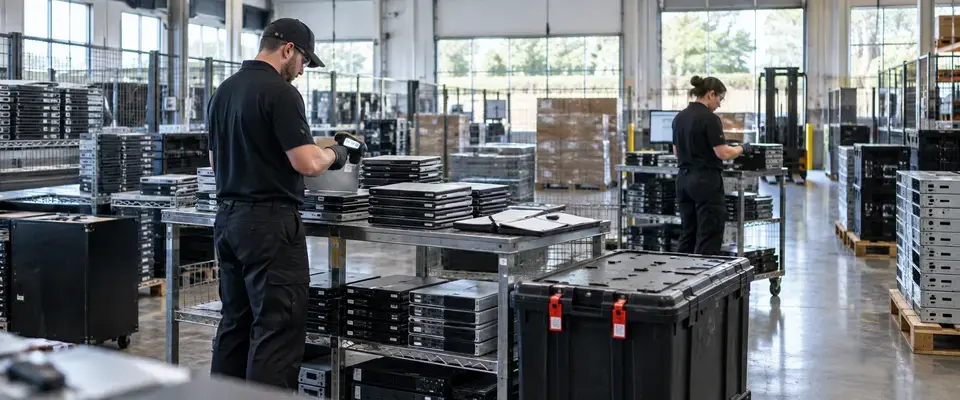
Banking & Financial Services
A regional bank turned retired IT equipment from a compliance liability into a fully audited, value-generating recovery program within 14 days.
View Detail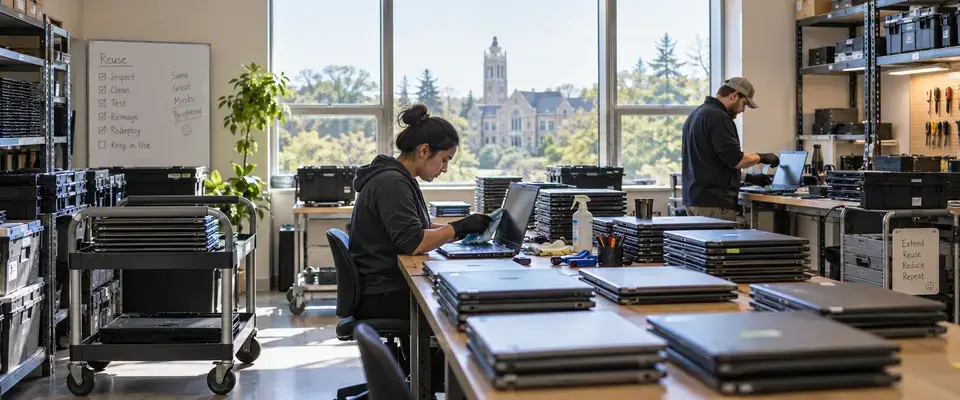
Higher Education
A private university refreshed IT assets across nine campus collection points while keeping 79% of devices in productive use.
View Detail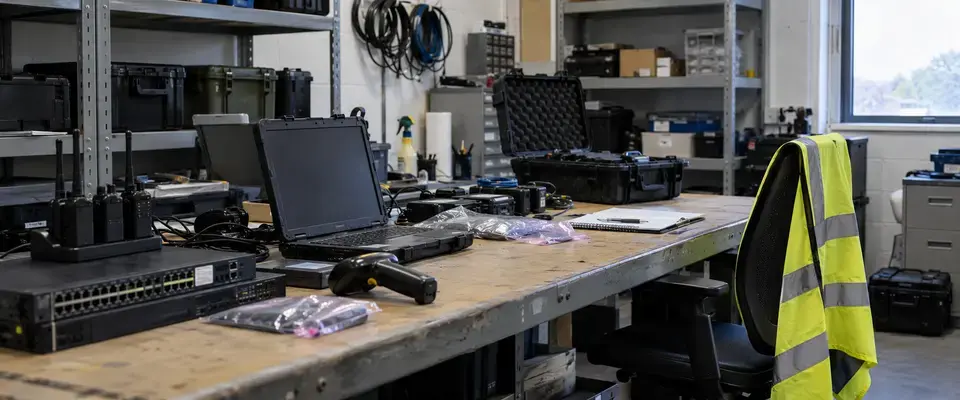
Aviation
An aviation operator retired 4,100 IT assets across four sites with 99% reuse recovery and full data protection.
View Detail
Consulting & Professional Services
A distributed consulting firm recovered 96% of returned laptops for redeployment across 14 collection points.
View Detail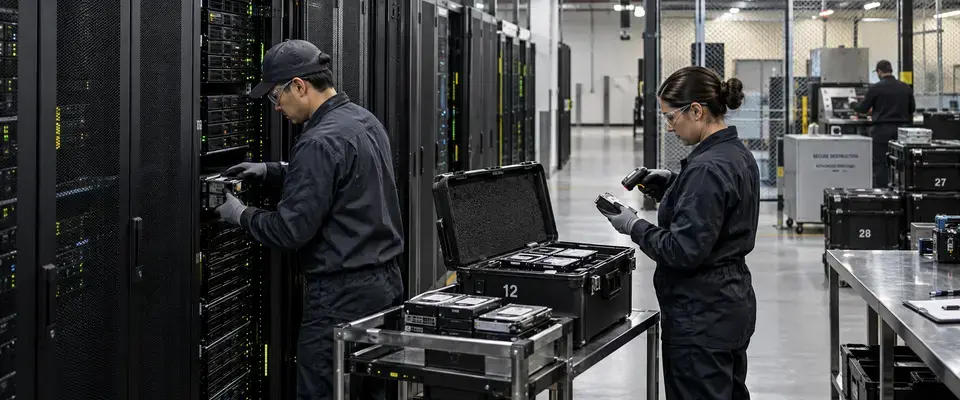
Data Center & Infrastructure
A data center operator processed 5,220 storage media items in 15 days with verified chain of custody.
View Detail