#1 Secure data destruction
On-site and off-site erasure, shredding, physical destruction, serialization, and witnessing — agreed to the media, its condition, and your security requirements.

Rapid Solutions International
Retire old technology while protecting your institution’s data and budget.
Why it matters
A school or university technology refresh involves more than replacing old devices. IT teams must account for equipment returned by students and staff, protect records and research data, and complete the work around teaching schedules. They also need to identify which devices still have value before approving disposal.
ITAD for education brings these decisions into a clear retirement process. It connects asset checks, secure data handling, reuse, resale, and recycling, helping institutions manage equipment responsibly and make better use of their technology budgets.
Campus risk
Replacing equipment does not remove the information stored on it. Retired devices may contain student records, staff information, financial files, or unpublished research.
Education teams also work around academic deadlines and tight budgets. Equipment returns from different departments with missing accessories, mixed conditions, and incomplete records. A structured ITAD service helps resolve these issues before assets leave institutional control.
Challenges
| Challenge | ITAD solution |
|---|---|
| Sensitive information remains on devices | Suitable data erasure or physical destruction |
| Refresh work must fit school breaks | Scheduled collections and agreed processing priorities |
| Equipment sits across departments or campuses | Inventory checks, handover records, and reconciliation |
| Replacement budgets are limited | Assessment for internal reuse and surplus resale |
| Missing accessories affect equipment value | Completeness checks before valuation |
| Unusable hardware accumulates in storage | Responsible recycling and documented disposition |
Before processing
Before data erasure or physical destruction, confirm which student records, research files, and other institutional data must be retained. Ensure required copies are securely transferred and verified, check for any retention requirements or holds that prevent deletion, and obtain documented approval from the authorized institutional owner before processing begins.
How we help
Rapid Solutions’ published university case study reports: “A private university refreshed IT assets across nine campus collection points while keeping 79% of devices in productive use.”
On-site and off-site erasure, shredding, physical destruction, serialization, and witnessing — agreed to the media, its condition, and your security requirements.
Check internal demand before selling usable equipment. For surplus assets, testing, grading, valuation, refurbishment, and resale based on condition and market demand.
Equipment unsuitable for reuse follows a responsible recycling route, with reconciliation and final reporting for inventory updates.
Next step
Share your equipment list, collection locations and academic deadlines. Our team can discuss data handling, reporting and recovery options before collection begins. Please exclude student records, research files and credentials from your initial enquiry.
FAQs
Our remarketing service covers laptops, desktops, monitors, servers, storage systems, and networking devices. Include accessories and other equipment in your initial list so we can confirm the project scope.
Confirm ownership and any funding or lease restrictions first. Your institution must have authorization for the proposed resale, reuse, or disposal.
For equipment approved for reuse or resale, coordinate authorized removal of management enrollment and activation locks with your IT team. Agree on the timing before processing.
Rapid Solutions International helps schools and universities protect institutional data, reconcile assets across departments, and recover value where suitable — around teaching schedules and academic deadlines.
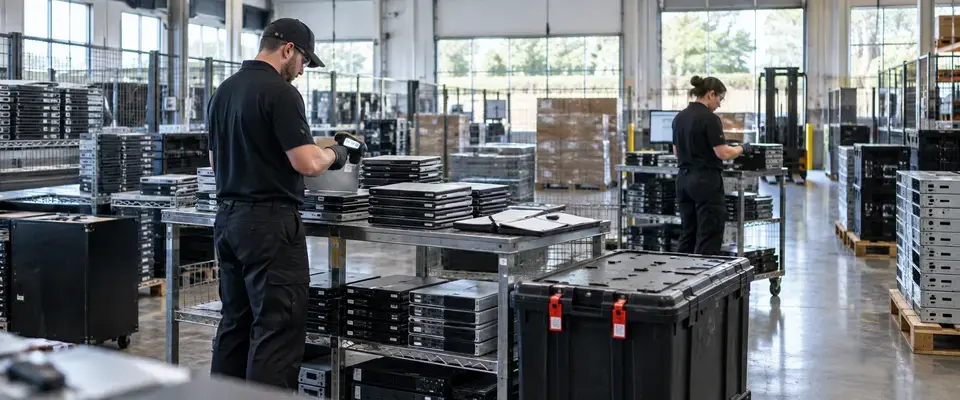
Banking & Financial Services
A regional bank turned retired IT equipment from a compliance liability into a fully audited, value-generating recovery program within 14 days.
View Detail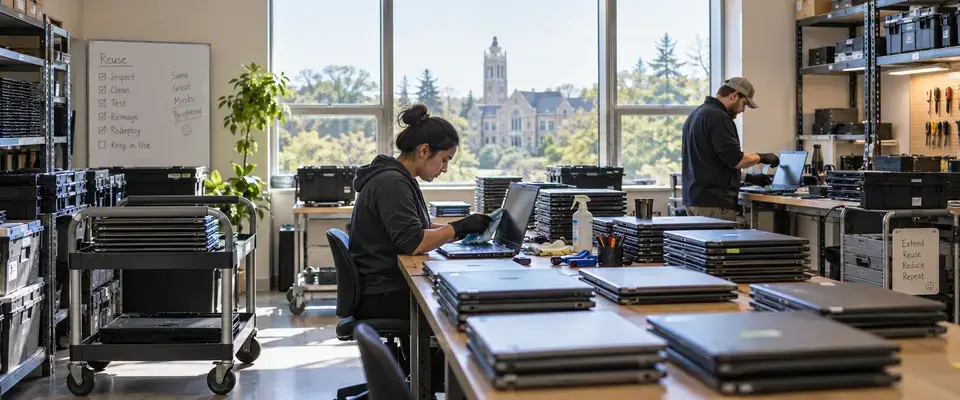
Higher Education
A private university refreshed IT assets across nine campus collection points while keeping 79% of devices in productive use.
View Detail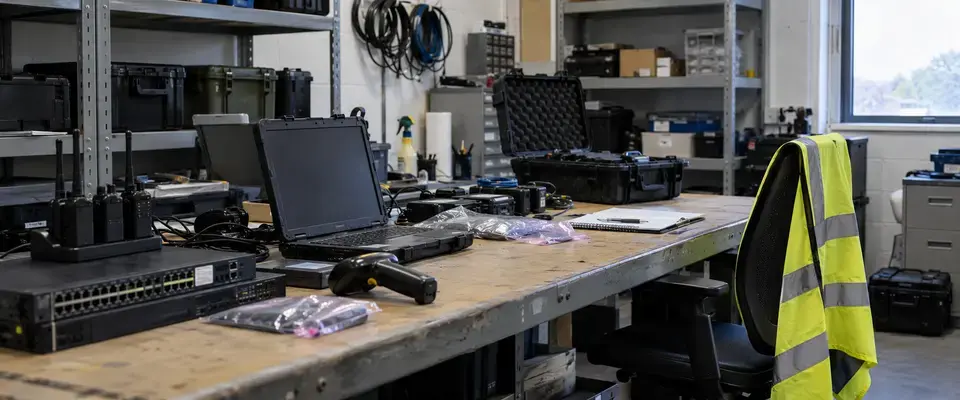
Aviation
An aviation operator retired 4,100 IT assets across four sites with 99% reuse recovery and full data protection.
View Detail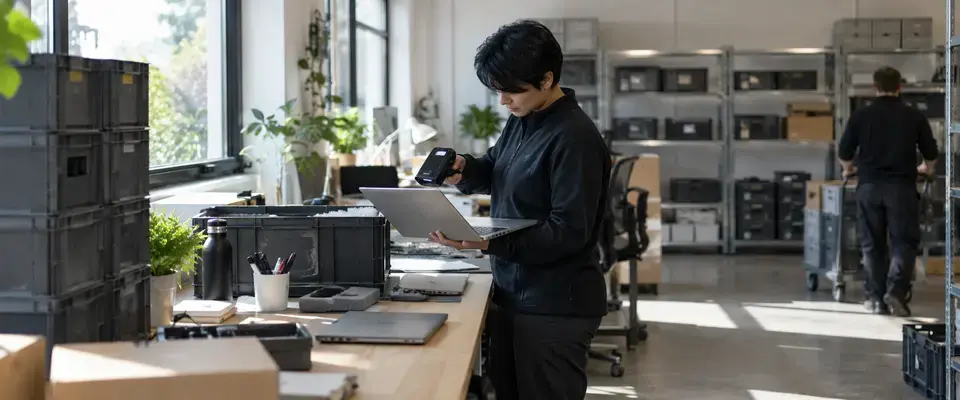
Consulting & Professional Services
A distributed consulting firm recovered 96% of returned laptops for redeployment across 14 collection points.
View Detail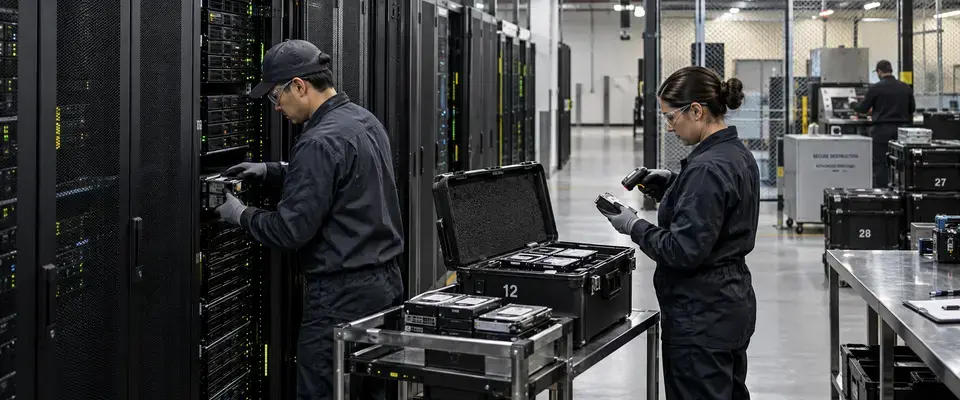
Data Center & Infrastructure
A data center operator processed 5,220 storage media items in 15 days with verified chain of custody.
View Detail