E-waste Management Guide in UAE
E-waste Management Guide in UAE
A retired laptop can create three problems on the same day. Its battery may become a fire risk, its circuit board contains materials that should be recovered, and its drive may still hold company data. E-waste Management deals with all three instead of treating old electronics as ordinary rubbish.
The global e-waste statistics shows that the world generated 62 million tonnes of electronic waste in 2022. It puts the problem plainly: “The world's generation of electronic waste is rising five times faster than documented e-waste recycling.”
If you’re a business owner, the subject goes beyond recycling. A useful programme records each asset, protects data, separates batteries and other risky parts, sends equipment through approved routes, and keeps proof of the final result. It also checks if working equipment can be reused before material recovery begins.
This guide explains the meaning, process and environmental effects of e-waste management. It gives extra attention to e waste management in the UAE because local permits and authority requirements affect collection, transport, treatment, and export. Let’s get started!
our services: data center decommissioning
What Does E Waste Management Mean?
E-waste management refers to the proper process of handling old or unwanted electrical equipment. It covers everything that happens after a company stops using a device.
This includes computers, servers, hard drives, phones, printers, monitors, network equipment, batteries, cables, appliances, and medical devices. Some people call it e-garbage management. However, e-waste and electronic waste are more common terms.
read more: Benefits of ITAD Program
Working devices should stay in use when possible. Companies can repair, refurbish, or reuse them. They can also recover useful parts. Equipment that cannot be reused should go to a qualified recycling facility. IT asset disposal should be the last option.
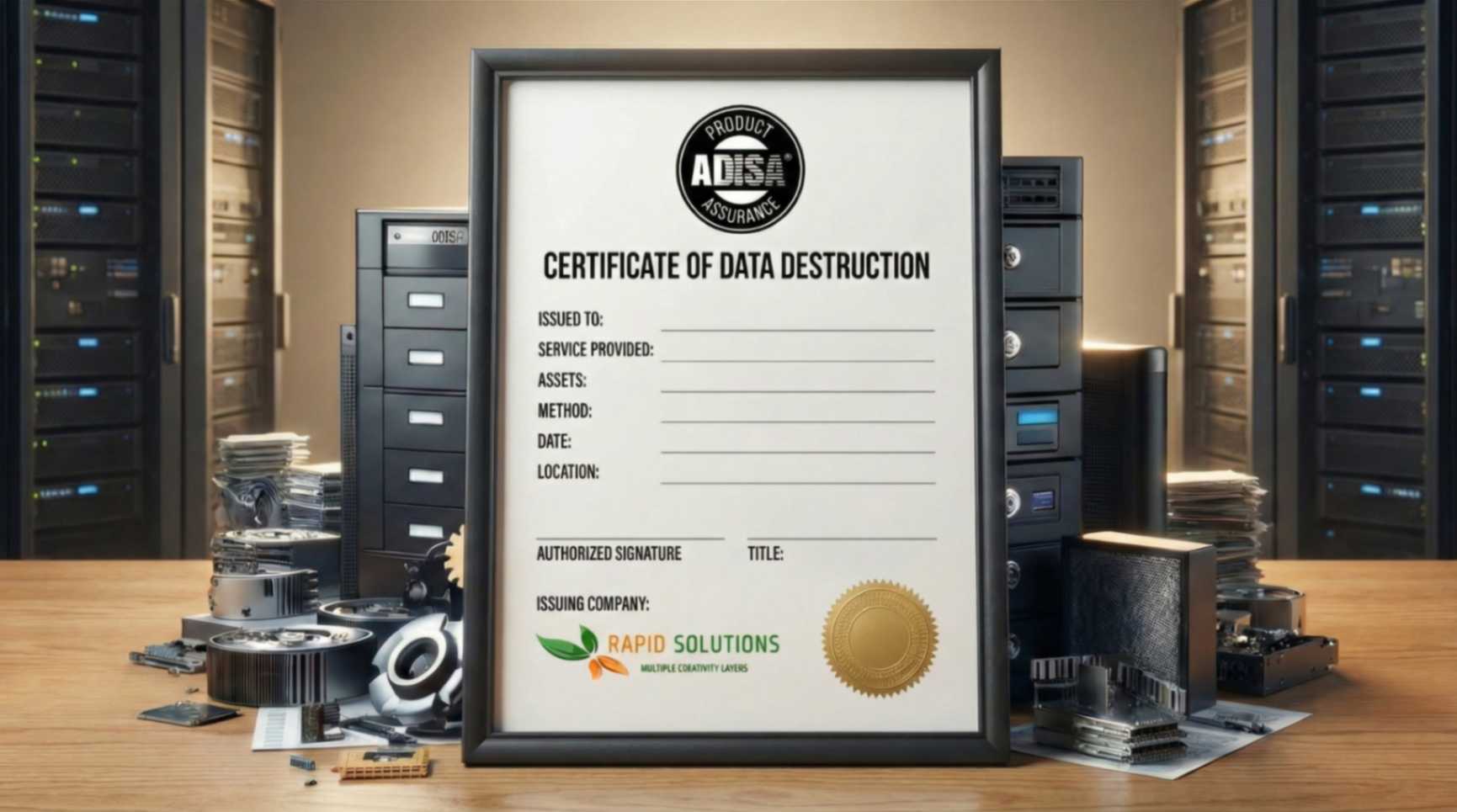
Moreover, companies must track their equipment after it leaves the office. They should record serial numbers, pack items safely, protect stored data, and use secure transport. In addition, they should keep recycling and data destruction certificates. A collection receipt only shows that someone picked up the equipment. It does not show what happened to it afterward.
Read Also: IT Asset Disposition Service
Why E Waste Management Is Important?
The importance of e-waste management is simple. Old electronics can expose sensitive data, harm the environment, waste valuable materials, and cause legal problems.
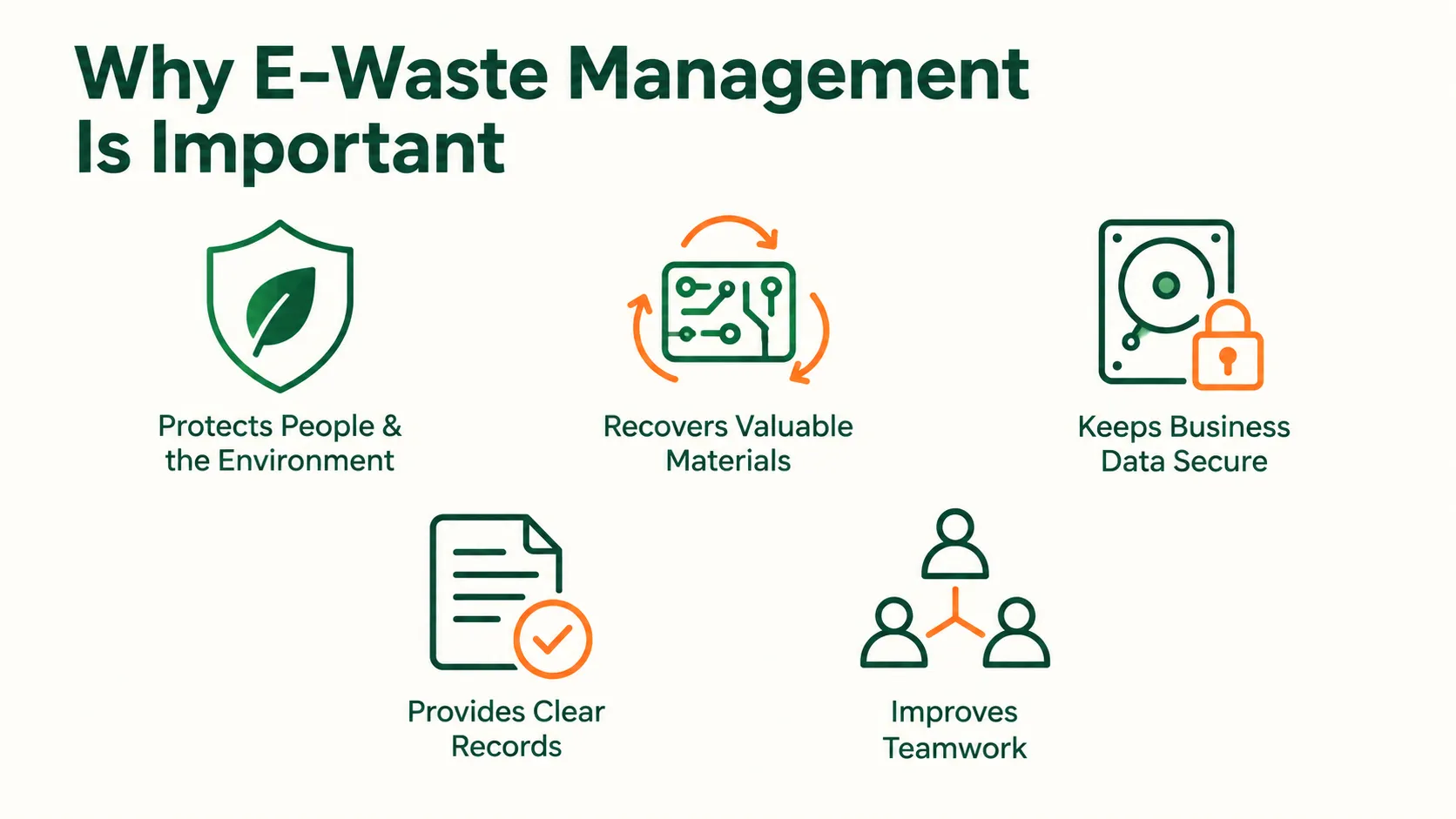
Protects people and the environment: Electronics may contain lead, mercury, cadmium, flame retardants, and other harmful materials. Poor handling can release these substances into the environment.
Recovers valuable materials: Circuit boards, cables, and other components contain copper, aluminium, gold, and silver. Qualified recyclers can recover precious metals found in electronic devices.
Keeps business data secure: Companies should choose a data removal method based on the device and the level of risk. NIST SP 800-88 provides guidance for media sanitization.
Provides clear records: A controlled process shows which assets the company removed, how it treated the data, and which items went for reuse or recycling. These records support audits and sustainability reports.
Improves teamwork: IT, security, facilities, finance, legal, and sustainability teams should work together. Clear responsibilities prevent old equipment from sitting in storage or disappearing from inventory records.
read more: Lead in e-waste
What Is the Environmental Impact of E Waste Management?
The environmental impact of e-waste management depends on how each device is handled. Reusing working equipment can reduce the need to manufacture new products. Proper recycling also recovers metals and keeps electronic waste away from illegal dumping sites.
Poor handling can cause serious pollution. Open burning, unsafe dismantling, acid treatment, and dumping can release harmful substances into the air, soil, dust, and water.
According to the World Health Organization:
Improper e-waste recycling can release up to 1,000 different chemical substances into the environment.
These substances may include lead, mercury, and other toxic materials. Children and pregnant women face greater health risks from this type of exposure.
Sending mixed electronics to landfills also wastes useful materials. Producing these materials requires mining, water, and energy. When companies recycle old equipment, metals such as copper, aluminium, gold, and silver can return to the supply chain.
Incineration reduces the volume of waste, but standard waste incinerators are not suitable for mixed electronics and batteries. These materials need specialist treatment and proper safety controls.
Recycling also uses fuel and electricity for collection, transport, and processing. Companies can reduce this impact by choosing nearby qualified recyclers, separating materials correctly, and checking where each material goes after processing.
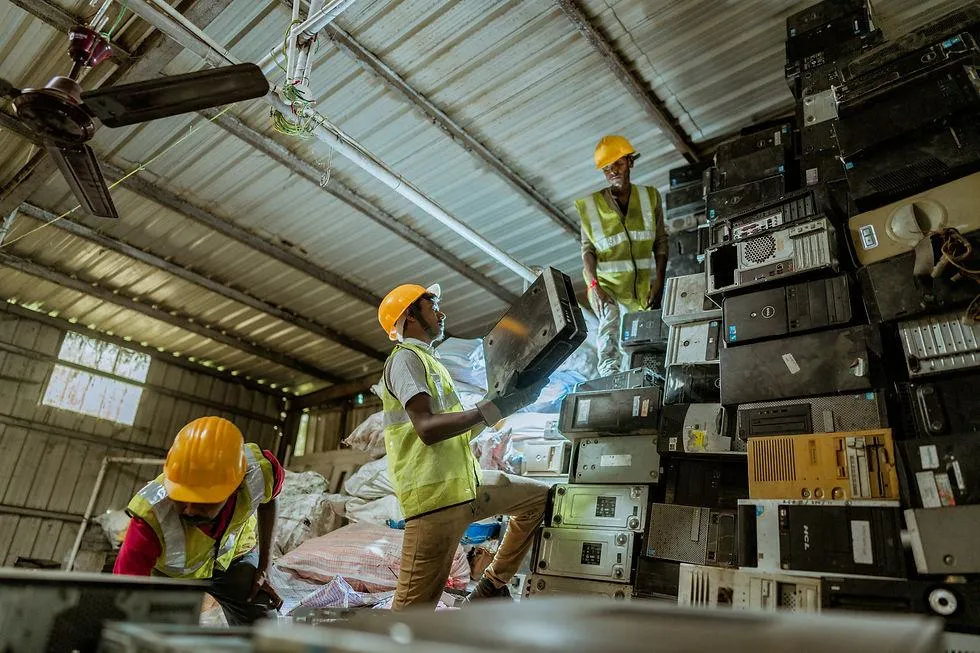
Types and Examples of E Waste
E-waste Management becomes easier when a company separates equipment by type, condition, data risk, and hazardous content instead of placing everything in one cage.
Approaches to E Waste Management
E-waste Management works best as a decision process, not a single disposal method. The condition of the asset, its data, battery type, legal status, and resale value should decide the route.
Reuse, Repair and Refurbishment
Reuse usually keeps the most value when equipment works, demand exists, and data can be removed safely. The process should include testing, grading, sanitization, a clear ownership transfer, and records of the destination.
Do not force reuse when an asset has swollen batteries, unsafe damage, unsupported security, export restrictions, or no realistic market. As you may know, storing weak equipment for years does not make it more sustainable. It often lowers value and raises risk.
Data Sanitization and Physical Destruction
Data treatment must come before resale, parts harvesting, or recycling. Use verified software or approved device commands when the media will return to use. Use physical destruction when policy, contract, damage, or technology makes reuse unsuitable.
Read More: Data sanitization vs. data destruction
Recycling and Material Recovery
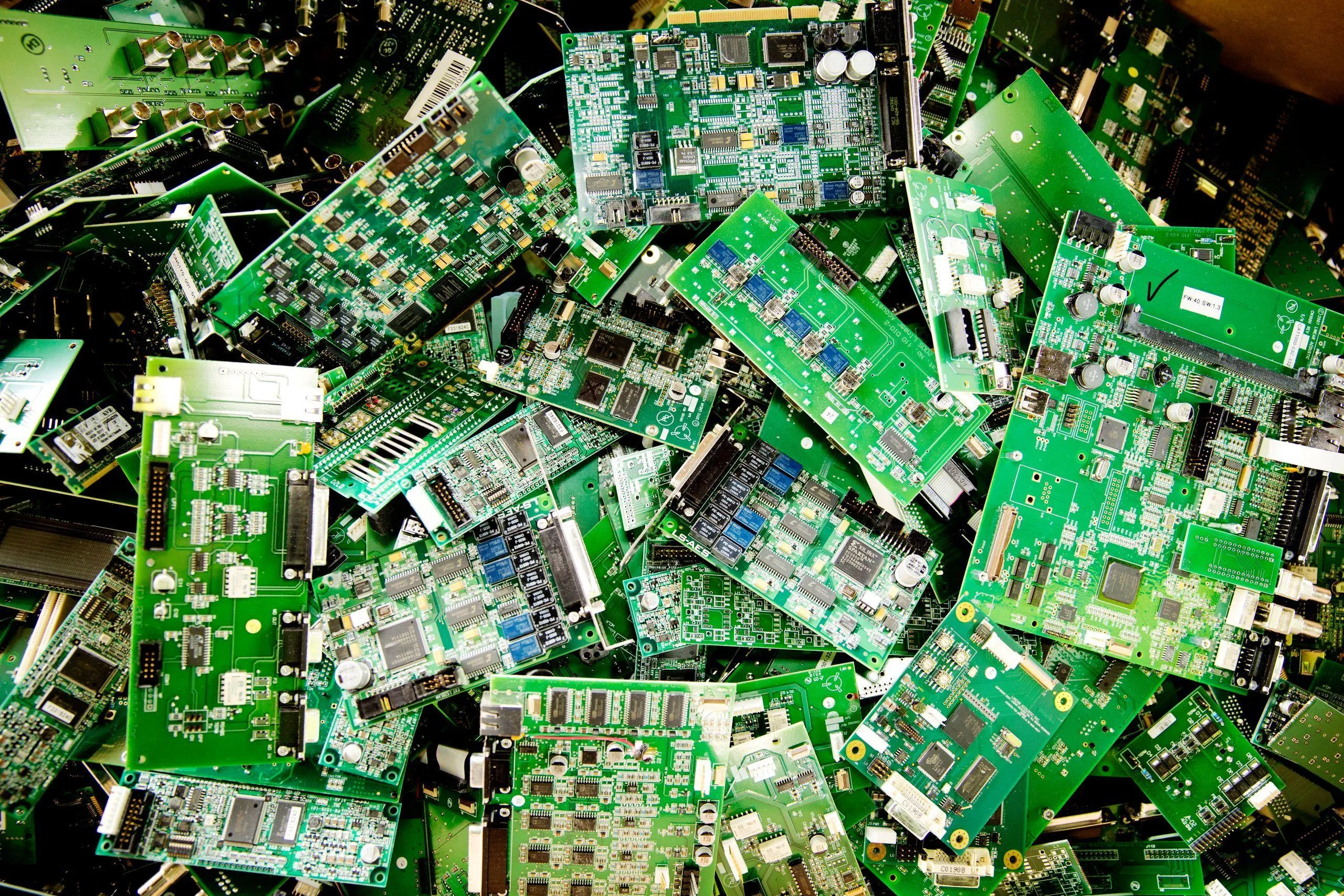
A recycling facility carefully weighs and sorts the electronic waste. Based on our work at Rapid Solutions, batteries, lamps, toner, refrigerants, and other hazardous parts should be removed before equipment goes for dismantling or shredding.. Each material then goes to to a suitable and approved recycling facility.
Good records also matter. Asset details, data destruction results, recycling reports, and final destinations help show exactly how the equipment was handled.
This is the same process used by Rapid Solutions teams when handling electronic waste for clients. The team also records asset details, data destruction results, recycling reports, and final destinations.These records give clients clear proof of proper handling.
Disposal Methods and Their Limits
Landfills and incineration should only be used for materials that cannot be recovered or recycled. Whole electronic devices should not go directly through these methods.
Landfills may allow harmful substances from electronics to enter the soil and water. Incineration can release pollutants into the air and destroy materials that could have been recycled. Batteries can also cause fires during storage, collection, transport, or waste processing.
E Waste Management in the UAE
E-waste Management in the UAE follows Federal Law No. 12 of 2018 and Cabinet Resolution No. 39 of 2021. These rules cover the safe handling of waste, including hazardous materials. Business owners should use approved companies for collection, transport, storage, and recycling. They should check that the provider’s permits cover the correct service, location, and waste type. Batteries and damaged electronics may need special handling.
International shipments may also need approval under the Basel Convention rules that took effect on 1 January 2025. You must always check the latest federal and local requirements before moving or exporting electronic waste.
What Are Challenges of Managing E Waste?
Common e-waste management challenges include:
Poor records and unclear responsibilities
Unknown quantities or missing serial numbers
Mixed waste and hidden batteries
Short project deadlines
Unclear data destruction rules
Providers without the correct permits
Limited proof of recycling or final destinations
Low-value equipment in remote locations
Choosing a provider based only on price
Recycling working equipment that could be safely reused
Conclusion
E-waste Management gives a business control over retired electronics, stored data, batteries, hazardous waste parts, reusable equipment, and recovered materials. A good plan starts with a clear and accurate asset list.
If the equipment is safe and still works, it can be reused. However, all data must first be securely erased or destroyed. The remaining materials should then go to approved recycling facilities, and businesses should keep records of each step. For UAE projects, Rapid Solutions follows the required local procedures and works through approved channels based on the service, waste type, and location.
FAQs
Can I Put Small Electronics in an Office Recycling Bin?
No. General office recycling is not designed for electronics, batteries, or data-bearing devices. Place them in a controlled collection point and use the approved company process.
Do I Need to Remove Batteries Before Collection?
It depends on the device and the provider's packing instructions. Remove loose batteries from mixed equipment where the procedure requires it. Isolate damaged or swollen batteries and do not ship them in ordinary boxes.

Ask an Expert
Call us 24/7 or submit the form below to speak with one of our specialists.
All fields required
_result_result.webp)
.png)