Data Sanitization vs. Destruction: What Is the Difference?
Understanding the Primary Difference Between Sanitization and Destruction in the Disposal Process
Imagine this. Your company replaces old servers. The devices are sent out for disposal. Months later, sensitive data appears online. Or you receive a regulatory fine because the storage devices were not handled properly.
Data risk does not end when equipment is retired.
Information moves through a lifecycle — collected, stored, used, and eventually removed. Many companies protect data while it is active but overlook secure disposal. That is where the choice between data sanitization vs data destruction becomes critical.
Understanding what information sanitization and destruction affects compliance, cybersecurity, sustainability, and asset recovery.
If handled poorly, disposal can lead to data breaches, regulatory penalties, legal issues, and loss of trust.
This guide explains the difference between data sanitization and data destruction and helps IT managers choose the right method based on risk and business needs.
read more: certified data destruction
What Is Data Sanitization?
Data sanitization is a process of intentional, irreversible, and permanent deletion or destruction of data from a memory device to make recovery impossible.
Data sanitization tries to prevent the potential leakage of sensitive information to unauthorized parties at the end-of-life of the storage device through reuse, resale, or disposal.
So, Sanitization supports:
Environmental sustainability
Data is highly classified
The device has no resale value
Risk tolerance is very low
read more: hard drive wiping service
Data Destruction Techniques
1. Shredding
- Overview: This is confirmed by breaking down the storage media into small sizes by the use of industrial shredders. Hard drive shredding is highly effective for all hard drives, CDs, DVDs, and any other physical media.
- Tools: Industrial-type shredders specifically made for electronic-bound media.
- Use Case: Appropriate for things such as devices that cannot be reused, hence secured for disposal.
2. Crushing
- Overview: Crushing deforms the storage device due to mechanical pressure, rendering it nonfunctional and making data recovery a near improbability.
- Tools: such as hard drive crushers and other applications-based and mechanical devices.
- Use Case: Organizations needing fast and verified destruction of their physical media.
3. Incineration
- Overview: Incineration is the act of running storage devices through high heat to ensure that the data — and the device containing it — is utterly eradicated.
- Tools: Dedicated incineration facilities.
- Use Case: Perfect for ultra-sensitive data that cannot stay within the device or a data trace.
our services: hard drive shredding services
Key Differences Between Sanitization and Destruction
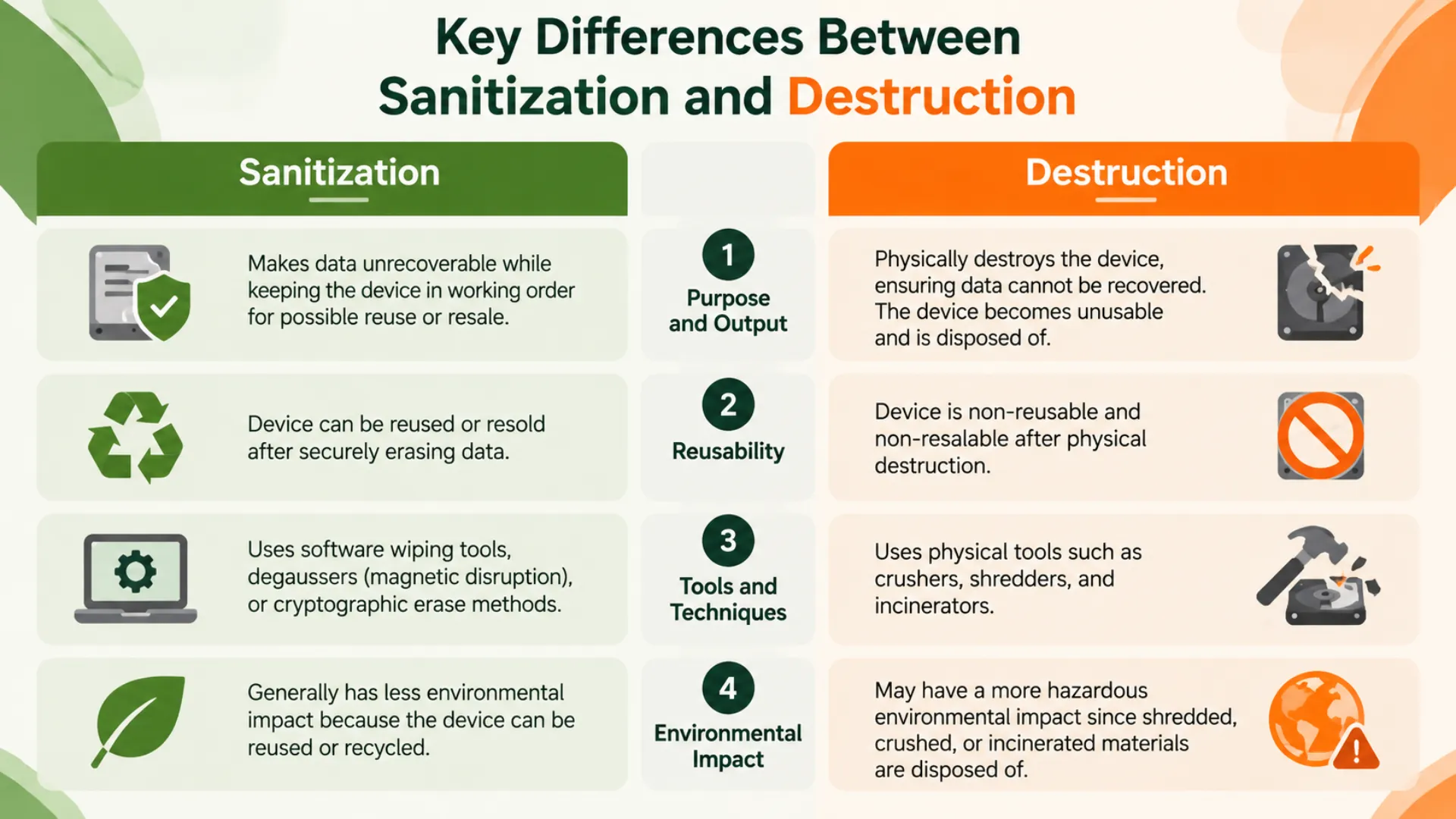
1. Differences Between Sanitization and Destruction: Purpose and Output
- Sanitization: The intention is to make the data on the device not recoverable along with keeping the device in working order to possibly reassign it or re-market it. The data is destroyed beyond recoverability either by being overwritten with a new value or otherwise modified into an illegible state.
- Destruction: The destruction is the actual physical destruction of the devices, ensuring that the recovery of data is impossible; thus, a device is made unusable and should be disposed of.
read more: importance of secure data destruction
2. Differences Between Sanitization and Destruction: Reusability
- Sanitization: enables the storage device to be either reused or resold after securely erasing data.
- Destruction: The device is rendered non-reusable and non-resalable as it is made nonfunctional by physical destruction.
3. Differences Between Sanitization and Destruction : Tools and Techniques
- Sanitization: Software tools that perform a process of cleaning or wiping data; degaussers use magnetic disruption; cryptographic erase employs encryption methods.
- Destruction: It destroys the storage by physical tools such as crushers, shredders, and incinerators.
4. Differences Between Sanitization and Destruction : Environmental Impact
- Sanitization: Generally has less environmental impact because the device can be reused or recycled.
- Destruction: This might result in a more hazardous effect on the environment since shredded, crushed, or incinerated materials are disposed of.
Best Practices for Implementing Data Sanitization and Destruction
1. Assess Data Sens
- Determine if the data stored on the device is very sensitive or highly classified—which might necessitate physical destruction—or not so—rather, some level of sanitization would suffice.
2. Compliance and Standards
- Comply: Ensure your practices align with any applicable regulations and standards, like GDPR, HIPAA, and NIST 800-88.
3. Choose the Best Method for Processing
- Choose the data disposal method depending on how sensitive the data is, regulatory requirements, and the intended use of the storage device in life.
4. Document the Process
- There shall be recorded documentation of how the data was destroyed, what the methods were, and who was responsible, including records of destruction or certificates of clearance/sanitization.
5. Obtain/Invite Certified Providers
- Deal with certified ITAD (IT Asset Disposition) providers compliant with the industry's best practices and standards for data destruction and data sanitization.
What Is Information Sanitization and Destruction in Simple Terms?
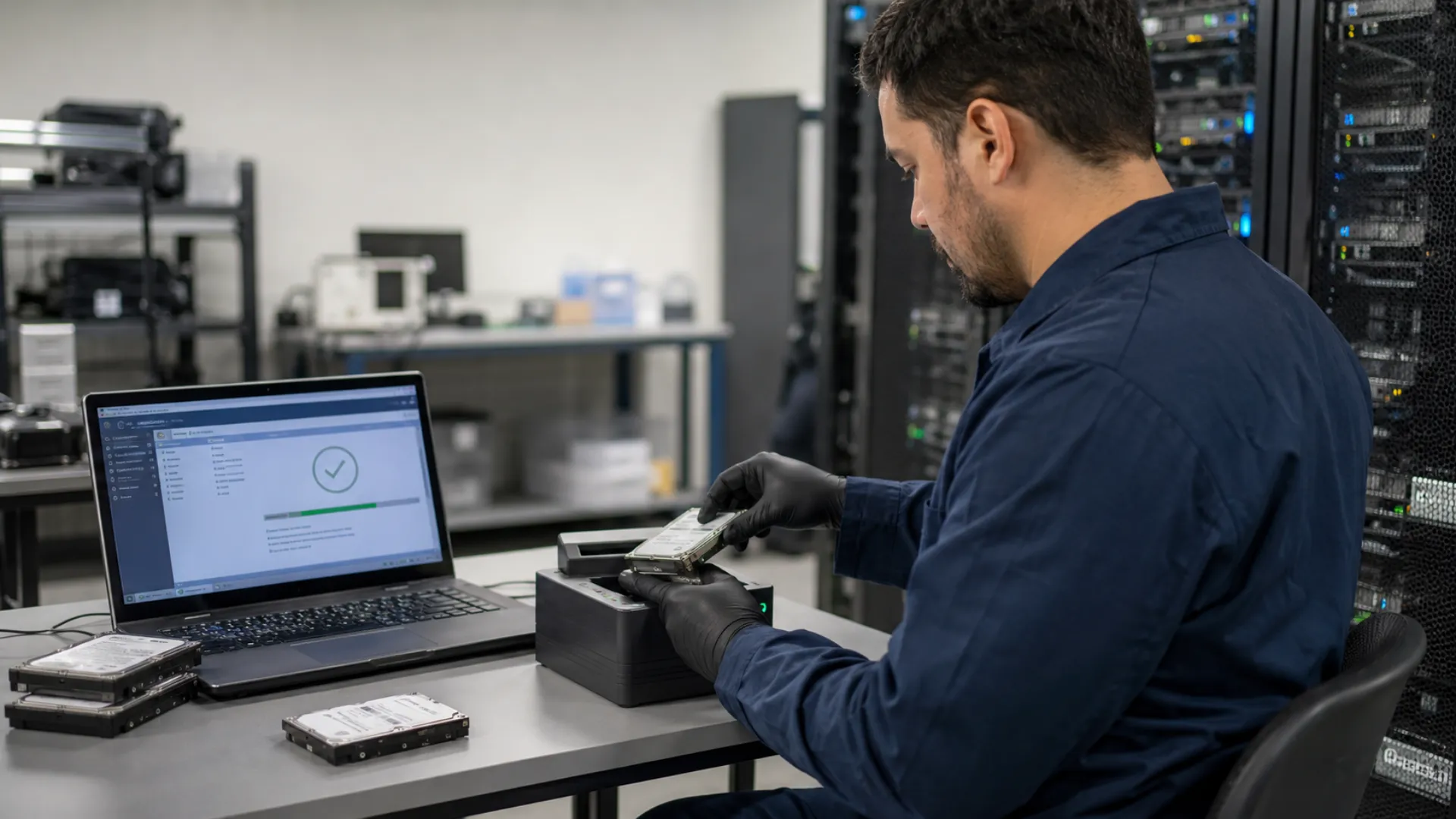
In simple terms, information sanitization means removing data from a device so it cannot be recovered, while keeping the device usable. Sanitization protects the data and allows reuse.
Information destruction means physically damaging the device so both the data and the hardware can no longer be used. Destruction removes the data and eliminates the device entirely.
Why Understanding the Difference Between Sanitization and Destruction Is Crucial?
Understanding the difference between data sanitization and destruction is crucial for ensuring that sensitive information is properly handled during the IT asset disposition (ITAD) process. While data sanitization makes data irretrievable through techniques like overwriting or degaussing, it allows the device to be reused or resold. On the other hand, data destruction physically damages the device to the point where recovery is impossible, providing the highest level of security. Businesses must determine the appropriate method based on the sensitivity of the data and their security requirements. Partnering with an ITAD provider, such as Rapid Solutions International, ensures that the process is carried out with the highest standards of compliance and security, protecting both your data and your organization's reputation.
Conclusion
It is relevant for organizations to understand the major differences existing between data sanitization and data destruction in their implementation.
At Rapid Solutions, data sanitization provides consistent reassurance that data storage devices can be put to new utilization or sold second-hand, enabled by secure erasure, whereas data destruction completely cripples the data and the device itself. This process of IT asset disposal properly supports the protection of sensitive information and contributes valuable help to the environment through organizational methodologies of best practices, chosen according to the nature of the data and specific requirements.
FAQs
Which Is Better: Data Sanitization Vs Data Destruction?
It depends on data sensitivity, compliance requirements, and whether the device will be reused.
If the equipment still has value and regulations allow it, data sanitization is often the preferred option because it protects the data while enabling reuse or resale.
If the data is highly sensitive or regulations require physical elimination, data destruction may be the safer choice.
How Long Does the Data Disposal Process Typically Take?
The timeline depends on the volume of devices, the method used, and whether processing is done on-site or off-site. Software-based data sanitization can take several hours per device depending on storage size. Physical destruction is usually faster but may require scheduling, transportation, and documentation processing.
Can Data Be Recovered After Professional Destruction?
When destruction is performed correctly using industrial shredding or certified crushing methods, recovery is not feasible with current forensic technology. However, improper destruction can leave residual risk, which is why verification and documentation are important.
Does Data Disposal Affect Cyber Insurance Coverage?
Yes. Many cyber insurance policies require documented proof of proper data disposal practices. Failure to follow recognized standards for sanitization or destruction may impact coverage in the event of a breach linked to retired equipment.

Ask an Expert
Call us 24/7 or submit the form below to speak with one of our specialists.
All fields required
_result_result.webp)
.png)