
Data Security Standards: A Practical Guide for Businesses
Data Security Standards: A Practical Guide for Businesses
Data security is not a task that businesses can manage with a few passwords, antivirus software, and basic IT policies.
Today, companies store customer and employee private information, financial data, intellectual property, and sensitive business files across cloud systems, laptops,and servers. So, without clear rules for protecting this information, security practices can quickly become inconsistent. This is why data security standards matter.
A data security standard gives organizations a clear set of requirements or controls for protecting information. Some focus on general information security, while others apply to specific industries, types of data, or regulatory requirements.
In this blog, we’re going to introduce all data security standards in detail. Let’s get started.
.webp)
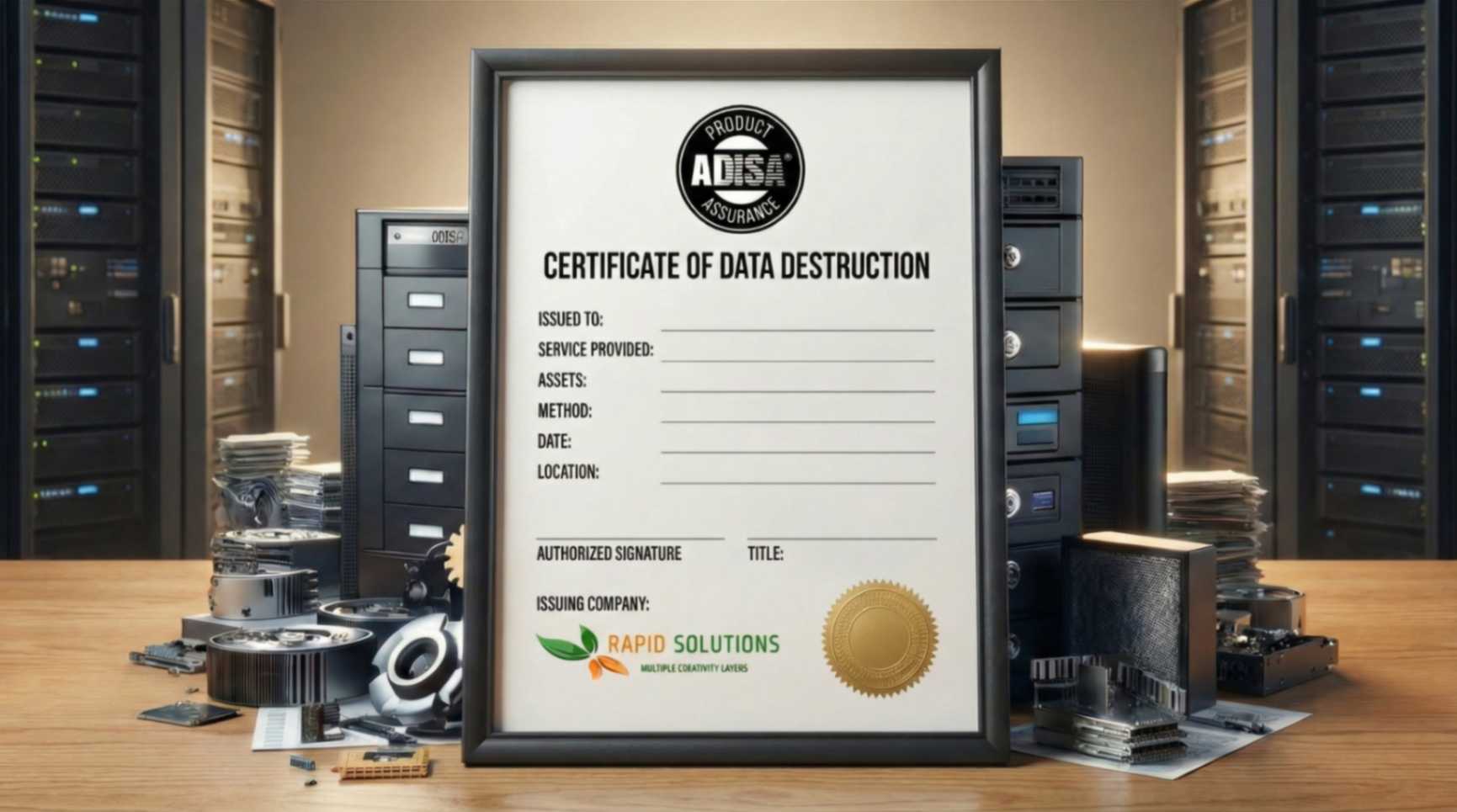
Real Also: Certificates of data Destruction
What Are Data Security Standards?
Data security standards are established requirements, controls, and practices used to protect sensitive information from unauthorized access, loss, alteration, or disclosure.
They can define how an organization should manage areas such as:
Access to sensitive data
Data encryption
User authentication
Risk assessments
Security monitoring
Data retention
Third-party access
Data sanitization and destruction
Security documentation
Compliance reviews
Some data security standards can lead to formal certification. Others are frameworks or regulatory requirements that businesses use to build their internal security controls. For example, ISO/IEC 27001 provides requirements for an information security management system, while NIST provides cybersecurity frameworks.
Therefore, there is no single data security standard that works for every organization.
Data Security Standards vs. Security Frameworks
Security standards and security frameworks are often grouped together, but they are not exactly the same.
A security standard usually contains defined requirements that an organization needs to meet.
A security framework gives companies a structured way to identify and manage security risks.
For example: ISO/IEC 27001 is a certifiable international information security standard. NIST Cybersecurity Framework helps organizations organize and improve cybersecurity risk management. CIS Controls provide practical security actions that organizations can prioritize.
Then there are regulations such as GDPR and HIPAA. These are legal requirements rather than voluntary security standards.
This distinction matters because companies sometimes choose a well-known framework without first understanding what they actually need. The better question is not, “Which security standard is the best?”
It is:
Which data security standards apply to our data, industry, customers, and legal obligations?
read more: data security technologies
Why Data Security Standards Matter
The main purpose of data security standards is to create consistency. Without a standard, security decisions can depend too heavily on individual employees or departments. One team may require multi-factor authentication while another does not. One department may regularly review access permissions while another keeps old accounts active.
A recognized standard gives everyone the same baseline. Data security standards can also help businesses:
Reduce security weaknesses
Protect sensitive information
Meet customer security requirements
Prepare for audits
Manage third-party risks
Support regulatory compliance
Define security responsibilities
Prove that security controls are actually in place
They are also becoming more important in supplier relationships. Large companies increasingly ask vendors about ISO certifications, SOC 2 reports, cybersecurity controls, data handling practices, and secure disposal procedures before allowing them to handle sensitive information.
So data security standards are not only an IT issue. They can affect contracts, sales, partnerships, and customer trust.
Major Data Security Standards Businesses Should Know
There are many data security standards, but businesses do not need to implement all of them. These are some of the most important ones.
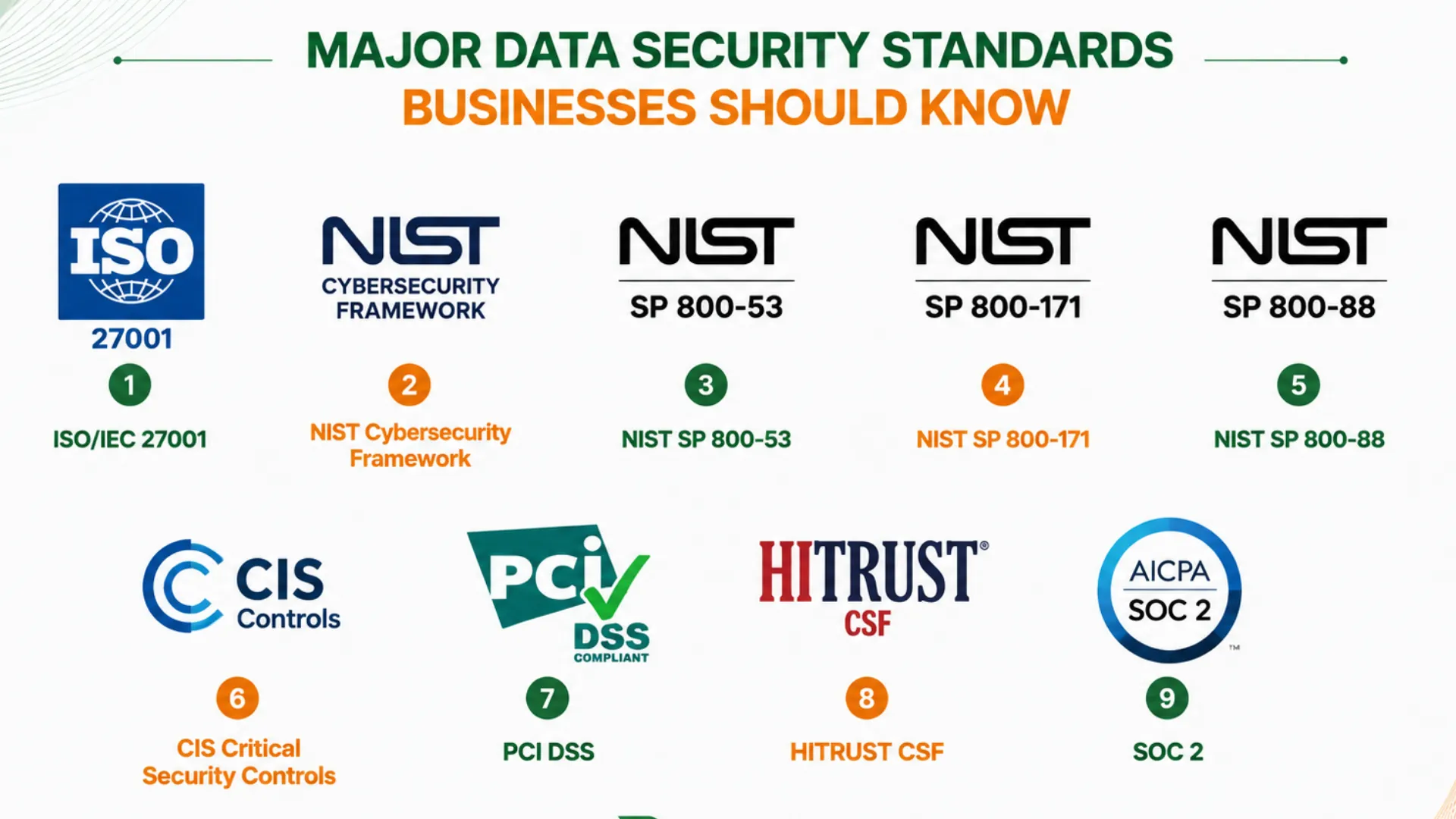
1. ISO/IEC 27001
ISO/IEC 27001 is one of the most widely recognized information security standards. It focuses on building an Information Security Management System, usually called an ISMS.
The standard helps organizations manage information security risks through policies, responsibilities, controls, monitoring, and continuous improvement.
ISO 27001 can be useful for companies that:
Handle sensitive customer information
Work with enterprise customers
Operate internationally
Need formal information security certification
Regularly receive security questionnaires from clients
One reason we consider ISO 27001 particularly useful is that it treats security as a business management issue rather than only a technical issue.
2. NIST Cybersecurity Framework
The NIST Cybersecurity Framework is widely used for managing cybersecurity risk. The current CSF 2.0 structure uses six main functions:
Govern
Identify
Protect
Detect
Respond
Recover
NIST CSF is flexible and can be used by companies of different sizes.
It is especially useful when an organization wants to understand its current security position and identify areas that need improvement.
Unlike ISO 27001, companies generally use NIST CSF as a risk management framework rather than pursuing certification against it.
3. NIST SP 800-53
NIST SP 800-53 provides a detailed catalog of security and privacy controls. It covers areas including:
Access control
Incident response
System security
Physical security
Risk assessment
Audit and accountability
Configuration management
Supply chain security
It is more detailed than the NIST Cybersecurity Framework and is commonly associated with U.S. government information systems.
Organizations outside government can also use the controls as a reference when building mature security programs.
4. NIST SP 800-171
NIST SP 800-171 focuses on protecting Controlled Unclassified Information, commonly called CUI, outside U.S. federal systems. It is particularly important for companies working with U.S. government agencies and contractors. If a business receives or processes CUI through government contracts, this standard can become an important part of its security requirements.
5. NIST SP 800-88
NIST SP 800-88 focuses on media sanitization. The current Revision 2 was published in 2025 and provides guidance for securely sanitizing information stored on media.
This standard becomes important when businesses retire:
Hard drives
SSDs
Servers
Laptops
Storage systems
Other data-bearing equipment
Companies often protect information carefully while a device is active but give much less attention to what happens when that equipment is retired. Data security should continue until the information has been properly sanitized or destroyed.
6. CIS Critical Security Controls
The CIS Critical Security Controls provide 18 prioritized cybersecurity controls. They cover practical areas including:
Asset inventory
Software management
Data protection
Account management
Access control
Vulnerability management
Malware protection
Security monitoring
Backup and recovery
Incident response
CIS Controls can be a good starting point for smaller organizations because they are practical and easier to prioritize than some larger security frameworks.
7. PCI DSS
The Payment Card Industry Data Security Standard, or PCI DSS, applies to organizations that store, process, or transmit payment card information. PCI DSS includes requirements related to:
Network security
Access control
Authentication
Vulnerability management
Monitoring
Protection of cardholder information
Businesses that accept card payments should understand whether their systems fall within PCI DSS scope.
8. HITRUST CSF
HITRUST CSF combines requirements from different security, privacy, and regulatory sources. It is commonly used in healthcare and other highly regulated industries. Organizations dealing with sensitive healthcare information may use HITRUST to bring several compliance requirements into one structured security program.
9. SOC 2
SOC 2 is slightly different from the other items on this list. It is an assurance report rather than a traditional security standard. SOC 2 assessments examine controls related to areas such as:
Security
Availability
Confidentiality
Processing integrity
Privacy
It is particularly common among SaaS providers, cloud companies, technology companies, and other service organizations. Customers may ask for a SOC 2 report before giving a vendor access to important systems or data.
Important Data Security Regulations
Not everything commonly described as a data security standard is actually a standard.Several important requirements come from laws and regulations.
GDPR
The General Data Protection Regulation applies to the processing of personal information covered by EU data protection rules. It places requirements on how organizations collect, use, protect, retain, and manage personal data.
HIPAA
HIPAA establishes requirements for protecting health information in the United States. Its Security Rule includes administrative, physical, and technical safeguards for electronic protected health information.
GLBA
The Gramm-Leach-Bliley Act applies to certain financial institutions in the United States. It requires covered organizations to protect customer financial information.
SOX
The Sarbanes-Oxley Act focuses mainly on financial reporting and internal controls. IT security becomes important where systems are involved in creating, processing, or protecting financial information. These regulations may overlap with recognized data security standards, but compliance with one standard does not automatically mean compliance with every law.
How to Choose the Right Data Security Standards
Choosing the right data security standards should start with your business risks. Organizations should consider legal, industry, and customer requirements. For example, payment processors may need PCI DSS, healthcare organizations may follow HIPAA, government contractors may require NIST-based controls, and companies seeking formal security certification may choose ISO/IEC 27001. Customer expectations may also influence decisions, with many enterprises requesting certifications like ISO 27001 or SOC 2 before partnering with suppliers.
Can Businesses Follow Multiple Data Security Standards?
Yes, and many do. One company might use ISO 27001 as its main information security management system while mapping its controls to NIST, CIS, customer security requirements, and privacy regulations.
The mistake is creating a completely separate security process for each one. There is often significant overlap. Access control, risk assessment, employee security, vulnerability management, supplier management, and incident response appear across many data security standards.
Businesses can usually build one strong internal control and map it to several requirements. This makes compliance easier to manage and reduces duplicate work.
Best Practices for Implementing Data Security Standards
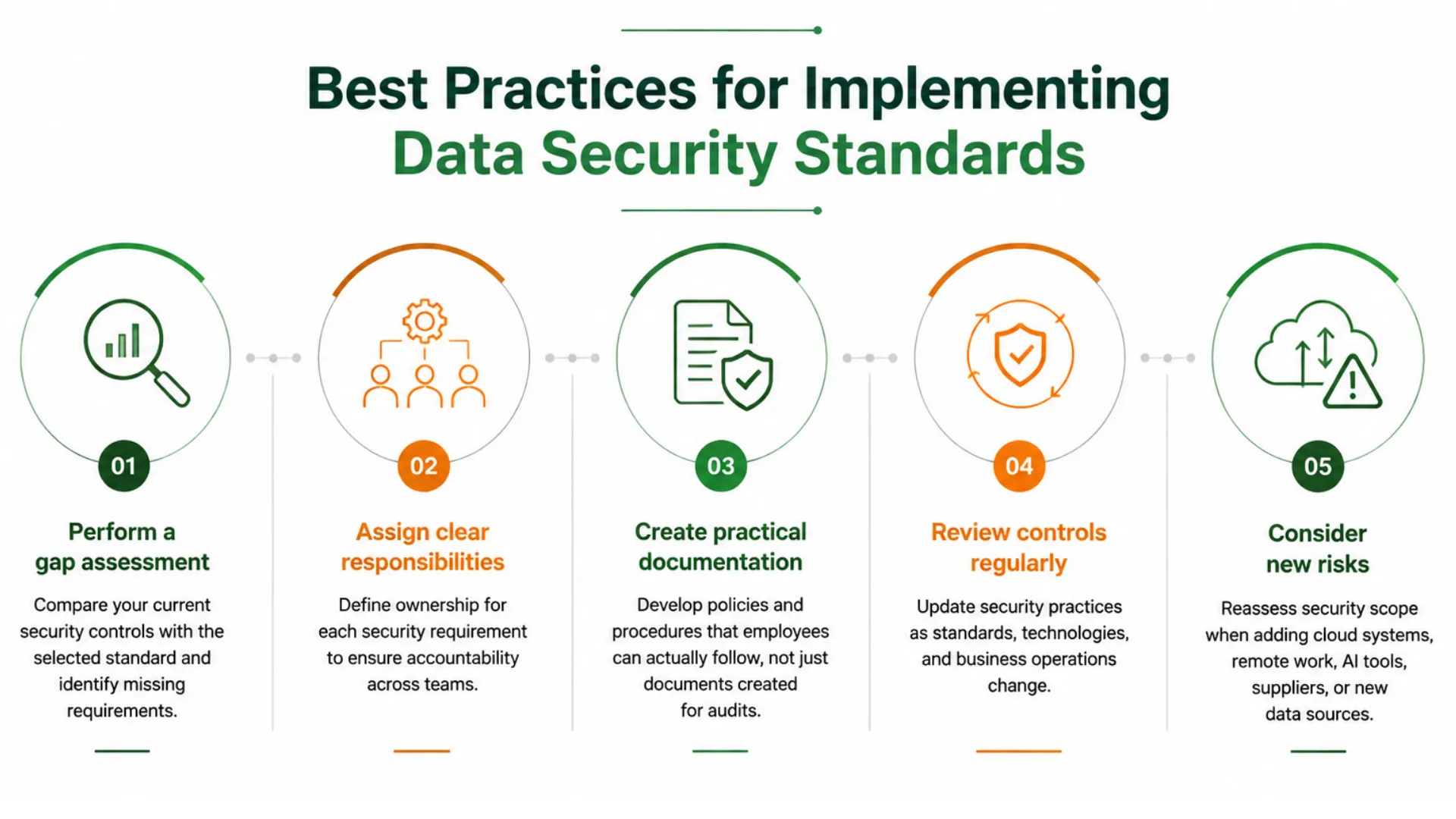
Perform a gap assessment: Compare your current security controls with the selected standard and identify missing requirements.
Assign clear responsibilities: Define ownership for each security requirement to ensure accountability across teams.
Create practical documentation: Develop policies and procedures that employees can actually follow, not just documents created for audits.
Review controls regularly: Update security practices as standards, technologies, and business operations change.
Consider new risks: Reassess security scope when adding cloud systems, remote work, AI tools, suppliers, or new data sources.
Conclusion
There is no single data security standard that every company should follow. The right choice depends on the information you handle, your industry, your customers, your location, and your contractual requirements.
ISO/IEC 27001 provides a broad information security management system. NIST offers several frameworks and detailed security controls. CIS gives organizations practical cybersecurity priorities. PCI DSS protects payment information, while standards such as NIST SP 800-88 address important areas such as secure media sanitization.
The goal should not be collecting as many certifications as possible. A better approach is to choose the data security standards that match your actual risks and then make those requirements part of everyday business operations.
FAQs
1. What Is the Most Common Data Security Standard?
ISO/IEC 27001 is one of the most widely recognized international information security standards. NIST frameworks and CIS Controls are also widely used, especially for cybersecurity risk management.
2. Do Small Businesses Need Data Security Standards?
Yes, but they do not necessarily need a large certification program.
Small businesses can begin with practical controls and adopt additional standards when required by customers, regulations, or business growth.
3. Is NIST a Data Security Standard?
NIST publishes several cybersecurity frameworks, standards, and guidelines. NIST CSF is a cybersecurity risk management framework, while publications such as SP 800-53 and SP 800-171 contain detailed security requirements and controls.

Ask an Expert
Call us 24/7 or submit the form below to speak with one of our specialists.
All fields required
_result_result.webp)
.png)